
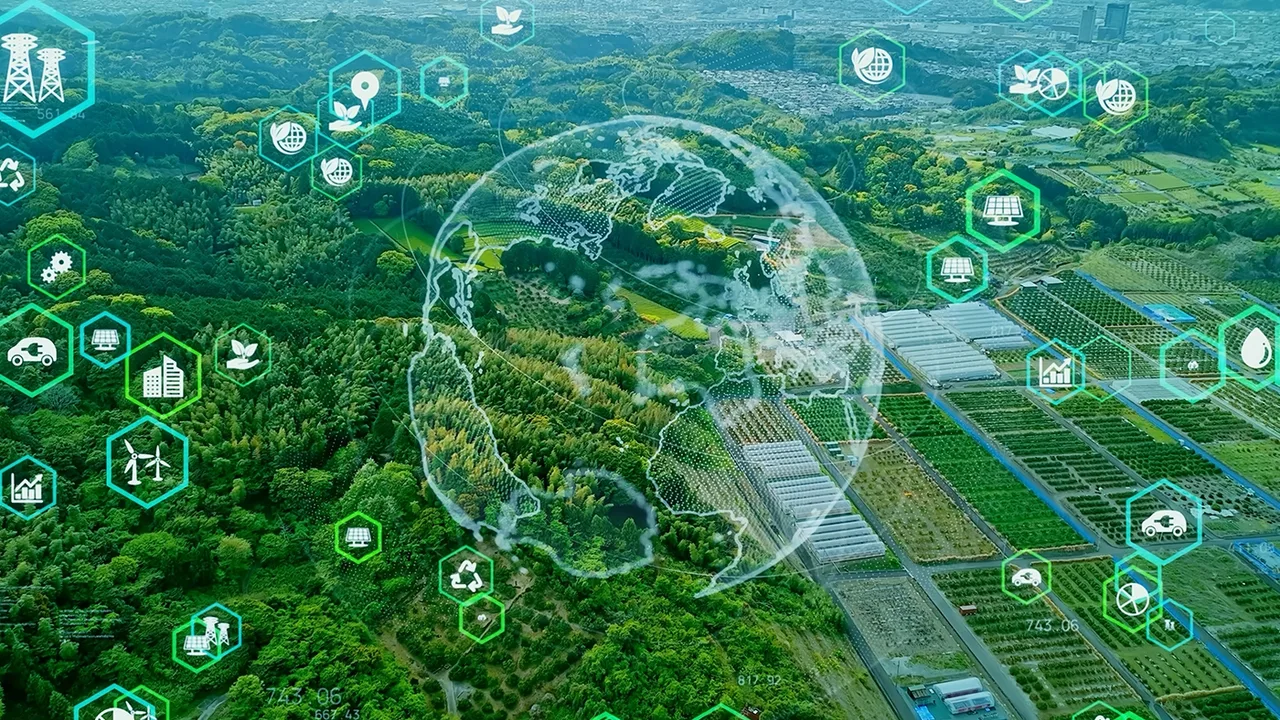
The climate crisis is no longer a distant threat — it’s an unfolding emergency reshaping ecosystems, economies, and communities around the world. Rising sea levels, extreme weather, and biodiversity loss are demanding urgent, large-scale responses. Amid this growing pressure, scientists and policymakers are turning to one of the most powerful tools of our era: AI climate solutions. Artificial intelligence, once confined to data science and automation, is now being applied to understand, predict, and potentially mitigate the most complex environmental challenges humanity has ever faced.
Introduction — Technology Meets the Planet’s Greatest Challenge
The promise of environmental tech lies in its ability to turn overwhelming amounts of climate data into actionable insight. From satellites orbiting the Earth to sensors tracking emissions in real time, AI systems are now capable of processing and interpreting data far beyond human capacity. But as optimism rises, so does skepticism. Can algorithms and machine learning models really help reverse the damage caused by industrialization and pollution? Or are we merely outsourcing human responsibility to machines?
As nations race toward net-zero targets, ai climate solutions have become a key component of sustainability plans. These solutions aim not only to monitor change but to predict, adapt, and prevent further environmental degradation — bridging the gap between scientific knowledge and tangible impact.
Understanding AI’s Role in Climate Action
From Data to Decarbonization
Artificial intelligence thrives where data is abundant and complexity is high — both of which define the climate challenge. By analyzing environmental data from satellites, weather stations, and ocean sensors, AI algorithms can detect emission hotspots, optimize energy distribution, and even model future climate scenarios. This allows governments and industries to make informed decisions faster than ever before.
For instance, AI-based systems can process terabytes of atmospheric data to identify methane leaks that would otherwise go unnoticed. By combining environmental tech with traditional climate science, engineers are building predictive models that anticipate disasters like droughts or wildfires before they escalate.
Why Climate Data Needs AI
Climate systems are immensely complex — they involve interconnected feedback loops that span oceans, land, and atmosphere. Traditional models, though effective, are limited by computational speed and data scale. AI bridges this gap by automating pattern recognition and running countless simulations in a fraction of the time. It can identify correlations invisible to human analysts, such as subtle shifts in ocean temperature or land-use patterns that may trigger extreme weather.
For example, machine learning algorithms help meteorologists refine hurricane prediction paths by integrating historical and real-time satellite data. These advancements enhance the accuracy of early warnings and give communities more time to prepare, saving lives and reducing damage.
Key AI Climate Solutions in Practice
Smart Energy Management
Energy production is both a cause and a potential solution to the climate crisis. As renewables like solar and wind grow, balancing their variable output becomes essential. AI-powered energy management systems analyze weather patterns, energy demand, and storage levels to optimize grid efficiency. This ensures a stable, low-carbon energy supply while minimizing waste.
In many countries, predictive AI algorithms are already used to forecast energy generation from renewables up to 48 hours in advance. Such systems help utility companies plan power distribution more effectively, reducing reliance on fossil fuels and improving overall efficiency. This combination of ai climate solutions and smart grids represents one of the most direct applications of innovation in environmental sustainability.
Agriculture and Food Systems
AI is transforming agriculture, a sector responsible for nearly one-third of global emissions. From soil monitoring to crop disease detection, AI-driven tools enable precision farming that conserves resources and reduces waste. Drones equipped with sensors capture detailed field data, allowing farmers to apply fertilizers and water only where needed. The result: higher yield, lower emissions, and smarter resource management.
Food logistics also benefit from AI optimization. Algorithms designed to forecast demand and manage transportation routes help reduce food waste — one of the most overlooked sources of greenhouse gas emissions. These systems balance efficiency with sustainability, proving that technology and environmental responsibility can coexist.
Urban Planning and Transportation
As cities expand, the need for sustainable urban planning grows. AI supports planners by analyzing traffic flows, energy usage, and public transport data to design low-emission cities. Predictive models simulate how infrastructure changes — like adding green spaces or altering traffic patterns — affect carbon output and air quality. Such insights enable policymakers to make data-driven decisions that enhance both livability and sustainability.
For example, several metropolitan governments now employ AI-assisted traffic management systems that adapt to congestion levels in real time. These solutions reduce fuel waste, shorten commute times, and cut emissions without requiring massive infrastructure overhauls.
The Promise of Environmental Tech
Monitoring Ecosystems and Biodiversity
AI’s capacity for image recognition and pattern analysis has unlocked new potential in environmental monitoring. Conservationists now deploy drones and satellites equipped with AI models to identify endangered species, track deforestation, and detect illegal logging. These tools allow for faster, more precise action to protect vulnerable ecosystems.
One notable advancement comes from satellite-based monitoring platforms that use neural networks to analyze forest cover and ocean temperatures. Combined with global data initiatives such as NASA Earthdata, these systems provide scientists with critical insights into how ecosystems respond to climate change. The ability to visualize real-time changes helps governments design adaptive conservation strategies before damage becomes irreversible.
Climate Finance and Carbon Accounting
AI is also making climate finance more transparent. By processing large datasets from corporations and governments, algorithms can detect inconsistencies in emission reports or identify projects most likely to deliver measurable impact. Financial institutions increasingly rely on AI-driven ESG analysis to guide investments toward greener outcomes.
These predictive models are reshaping sustainability accounting, ensuring that funds are allocated to projects that genuinely reduce emissions. The intersection of technology and finance underscores how ai climate solutions are not limited to science — they are equally transforming policy and business decision-making worldwide.

Innovation with Limits — Challenges and Risks
The Energy Cost of AI Systems
Despite the optimism surrounding ai climate solutions, the technology itself comes with environmental costs. Training large machine learning models requires massive computing power, which consumes significant amounts of electricity—often sourced from non-renewable energy. Ironically, the same systems designed to reduce carbon emissions can contribute to them if powered inefficiently.
Data centers worldwide already account for nearly 2% of global electricity consumption, and that number is expected to rise as AI adoption grows. To address this, leading technology companies are investing in renewable-powered servers, advanced cooling systems, and low-energy computing architectures. Greener algorithms—those optimized for minimal computational load—are also emerging as a way to reduce the carbon footprint of digital innovation.
Data Bias and Ethical Concerns
AI can only be as objective as the data it is trained on. Incomplete or biased datasets can lead to solutions that overlook vulnerable regions or populations most affected by climate change. For instance, if satellite data disproportionately represents urban environments, AI models may undervalue rural or indigenous ecosystems. These blind spots risk reinforcing inequality under the guise of sustainability.
Transparency is the key to mitigating this challenge. Open-source models and shared datasets allow scientists from different countries to collaborate, ensuring more diverse representation and fairer environmental analysis. Ethical oversight and global standards are also necessary to ensure that environmental tech serves humanity as a whole rather than select economic interests.
The Future of AI-Driven Climate Innovation
Global Partnerships and Policy Integration
The effectiveness of ai climate solutions depends not only on technological breakthroughs but also on international cooperation. Governments, research institutions, and the private sector must align efforts to ensure consistent data sharing, policy support, and funding. Without this collaboration, innovation risks becoming fragmented, with isolated projects failing to achieve systemic impact.
International frameworks like the Paris Agreement are beginning to integrate AI-powered climate modeling into policy design. AI’s ability to simulate outcomes based on multiple policy scenarios enables decision-makers to predict the long-term environmental and economic effects of their actions. By using predictive analytics, policymakers can make informed choices that balance immediate growth with sustainable development.
Next-Generation Environmental Tech
Emerging technologies like quantum computing, edge AI, and biosensors are expected to take climate innovation to the next level. Quantum algorithms, for instance, could model molecular interactions for new low-carbon materials or ultra-efficient batteries. Meanwhile, edge AI—processing data directly on devices instead of centralized servers—reduces both latency and energy demand, making sustainability monitoring faster and greener.
Even in architecture and construction, advanced environmental tech is helping design buildings that self-regulate temperature and energy use. AI-based materials research is paving the way for carbon-absorbing concrete and ultra-lightweight composites, merging environmental responsibility with human creativity.
Can AI Really Save the Planet?
The question isn’t whether artificial intelligence can solve the climate crisis—but whether humanity will use it wisely. AI is a tool, not a miracle. It can model outcomes, improve efficiency, and guide action, but it cannot replace the social and political will needed to drive change. Technology amplifies human intention; if guided by ethics and collaboration, it can help reverse decades of damage.
Still, the transformative potential of ai climate solutions cannot be ignored. From detecting invisible emissions to optimizing renewable grids, AI offers tangible methods to slow global warming. Yet, its true success will depend on governance, inclusivity, and sustainability in its own operations.
In the coming decade, climate resilience will rely on how effectively technology aligns with humanity’s shared values. The world doesn’t need more innovation for its own sake—it needs innovation that heals, restores, and sustains. In this sense, AI may not single-handedly save the planet, but it could help us save ourselves.