Across the industrial world, speed has become a new form of competitiveness. As global demand for production facilities accelerates, manufacturers are under constant pressure to build faster without compromising quality or safety. This has led to the rapid rise of the prefabricated steel factory — a modular construction system that is redefining industrial timelines and efficiency.
Introduction — The Race to Build Faster
Factories are no longer static structures; they are strategic assets that determine how quickly a company can respond to market changes. Traditional concrete and masonry methods often require months of on-site work, which limits flexibility and increases costs. By contrast, modular construction and off-site fabrication allow developers to design, manufacture, and install industrial facilities in a fraction of the time.
The core principle is simple: move as much work as possible away from the job site and into a controlled factory environment. By doing so, developers eliminate delays caused by weather, labor shortages, and unpredictable conditions. What emerges is a smarter and faster way of building — powered by engineering precision, automated fabrication, and synchronized logistics.
Why Speed Matters in Industrial Development
The Economics of Time
Every day saved in construction represents money saved for manufacturers. A delay in launching production means lost revenue and increased holding costs. In industries where margins are tight and demand cycles are short, time is as valuable as capital itself. The faster a facility becomes operational, the sooner it begins to generate profit.
For example, a packaging company that reduces construction time by 12 weeks can start operations a quarter earlier — allowing them to secure client contracts before competitors do. It’s not just about speed; it’s about maintaining financial agility and reducing the overall cost of ownership.
The Competitive Edge
In global supply chains, timing can make or break a business. A shorter construction cycle allows manufacturers to scale production rapidly in response to shifting demand. Industries like logistics, automotive, and consumer goods are particularly sensitive to these pressures. The ability to build a fully functional, high-quality factory in just a few months is no longer optional — it’s a strategic advantage.
Prefabricated Steel Factory: The Core of Fast Construction
What Makes Steel the Ideal Material
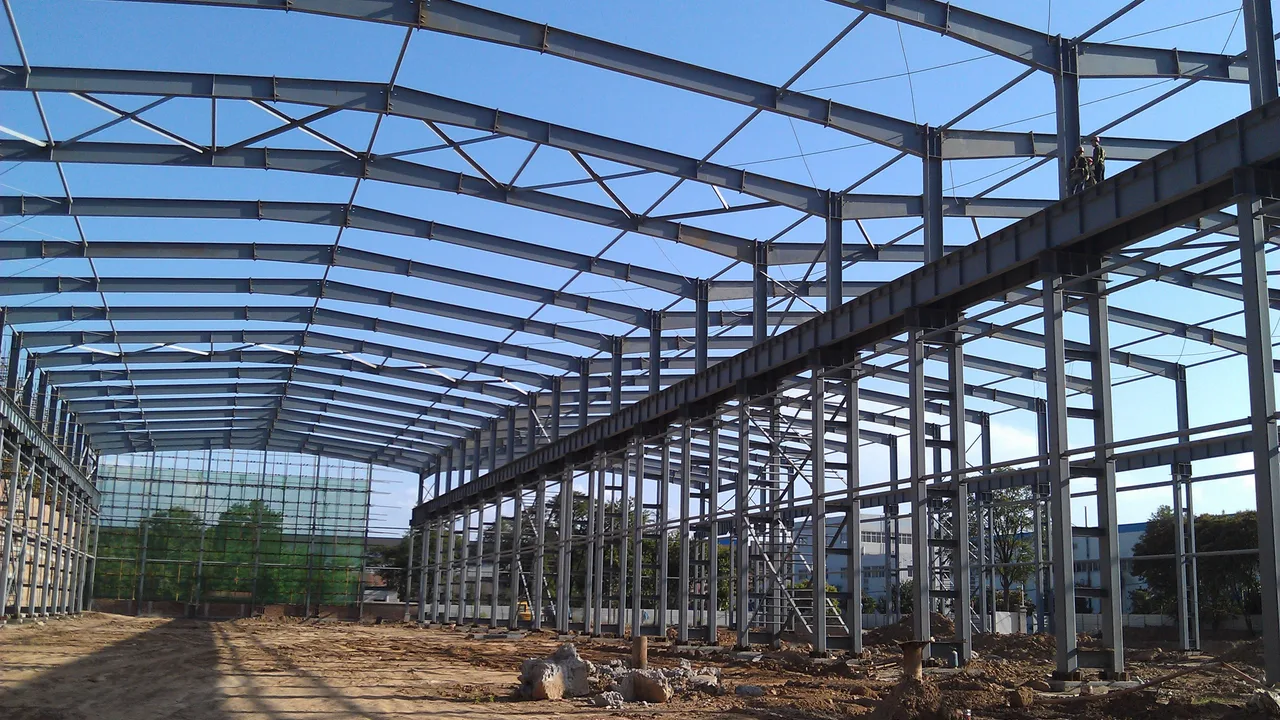
Steel has long been recognized for its strength, precision, and adaptability. In a prefabricated steel factory, nearly every structural component — from columns and beams to trusses and roof panels — is produced in advance, with millimeter accuracy. This eliminates errors and speeds up assembly. Unlike concrete, which requires curing time, steel components can be bolted or welded together immediately, allowing construction to move continuously.
Additionally, steel is one of the most recyclable materials available, making it an environmentally responsible choice for industrial developers who prioritize both speed and sustainability. Its durability ensures a long service life, while modern coatings and anti-corrosion systems minimize maintenance needs.
The Workflow of a Prefabricated Project
The workflow behind a prefabricated project is a tightly coordinated system that maximizes efficiency at every stage:
- Design & BIM Integration: Digital modeling ensures precision and allows for clash detection before fabrication begins.
- Off-Site Fabrication: Structural members are manufactured in controlled factory settings, unaffected by weather conditions.
- Delivery & Assembly: Components are shipped in pre-labeled segments, ready for direct on-site installation.
- Inspection & Commissioning: Quality control checks confirm that every connection and weld meets the design standard.
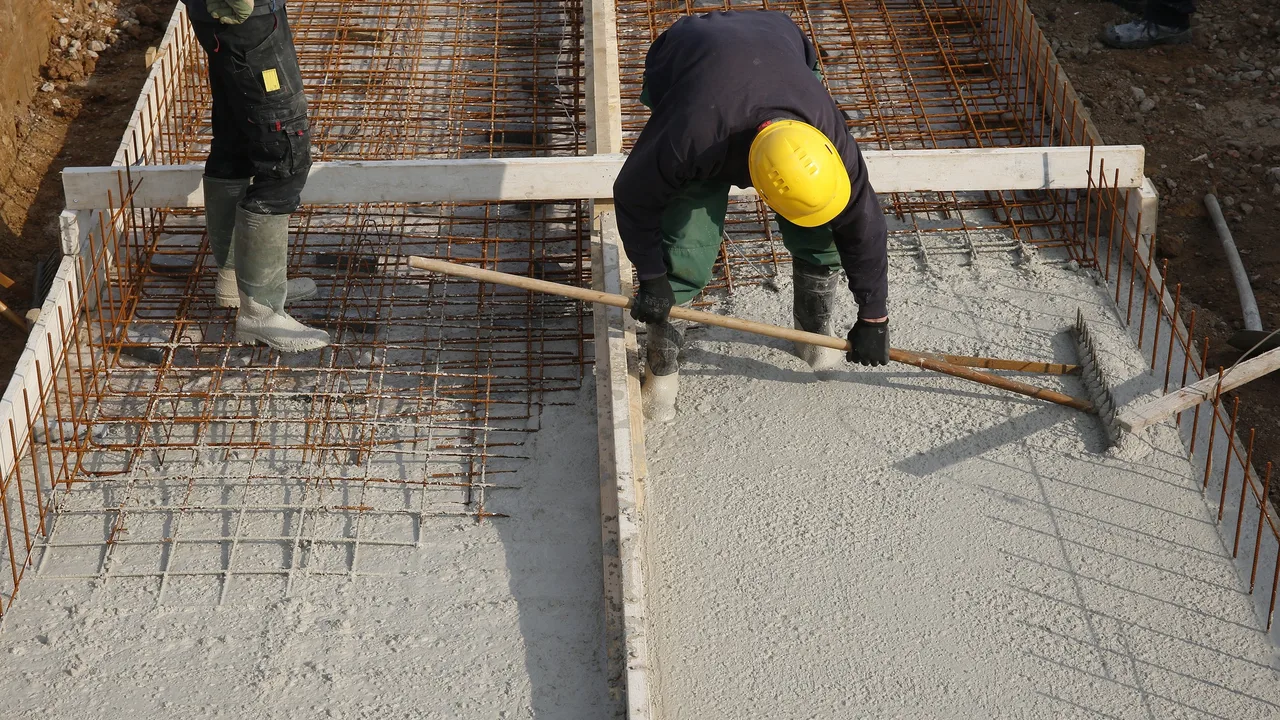
This synchronized workflow allows different project phases to occur in parallel — for example, while foundations are poured on-site, steel members are being fabricated off-site. The result is a dramatic reduction in total project duration without sacrificing precision or safety.
How Modular Construction Accelerates Timelines
Off-Site Precision, On-Site Efficiency
Modular construction transforms how industrial facilities are built. Instead of treating each stage as separate, it overlaps them to save time. When fabrication occurs off-site, installation teams can begin immediately once the foundation is ready, turning traditional sequencing into a concurrent process.
This not only shortens project duration but also reduces risk. Weather delays become nearly irrelevant, on-site labor requirements decrease, and quality control improves thanks to repeatable factory conditions. The combination of digital design and precision manufacturing ensures that every module fits perfectly, reducing the need for rework or adjustment during installation.
Case Example — Speed and Scale in Practice
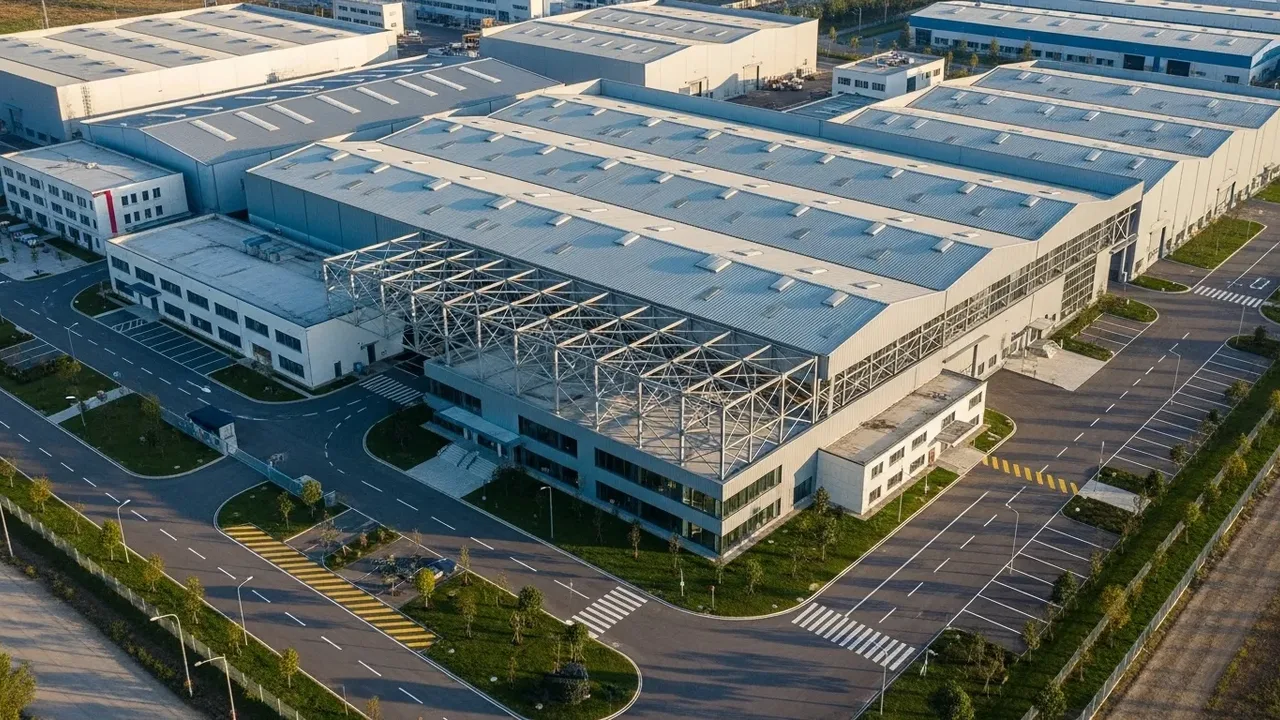
In China, a leading prefabricated steel factory in china recently completed a 20,000 m² production facility in less than 10 weeks. The project involved simultaneous foundation work, automated steel fabrication, and modular assembly on-site. The integration of BIM technology, automated cutting systems, and synchronized logistics allowed the project to reach completion nearly 60% faster than a conventional build.
This project illustrates how prefabrication combines industrial precision with on-site agility. The result is a rapid construction process that delivers full-scale, high-quality facilities at unmatched speed — a model that is now setting new benchmarks for the global manufacturing industry.
Fast Installation Techniques and On-Site Innovation
Crane Systems and Bolt Connections
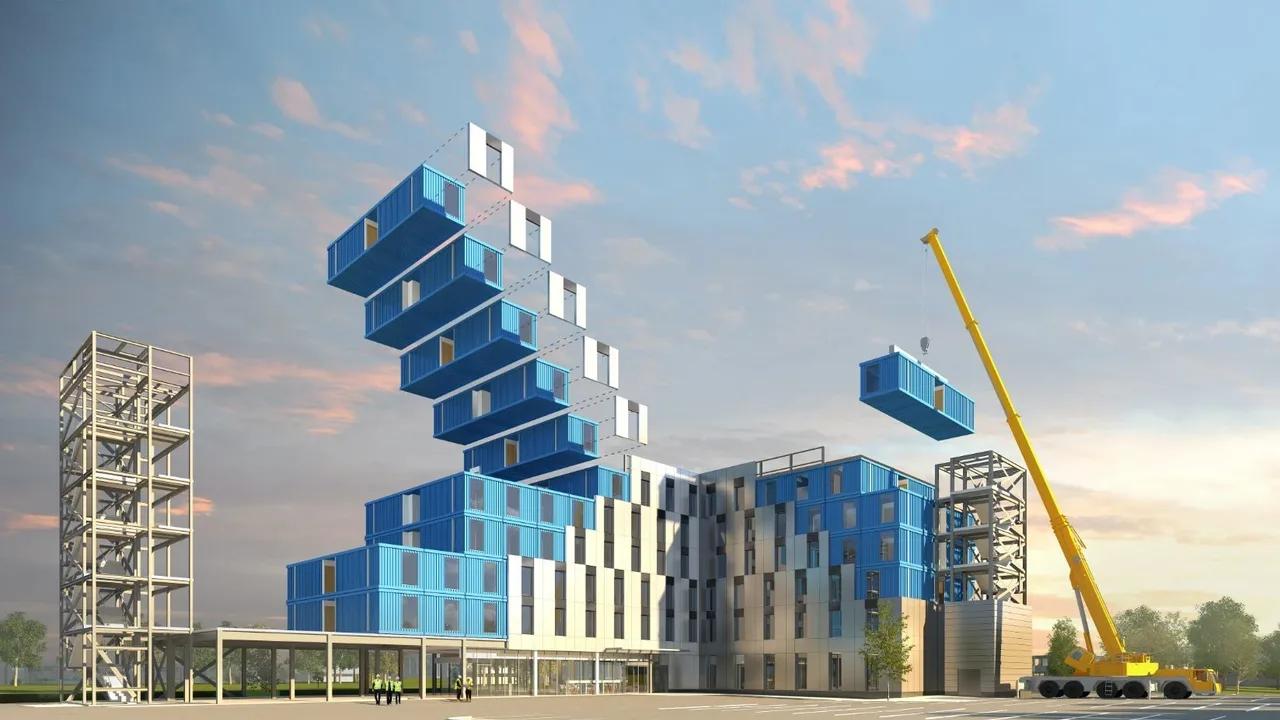
Rapid factory construction depends on mechanical efficiency as much as it does on design. The use of pre-engineered bolt connections has largely replaced on-site welding, allowing for faster and safer assembly. Mobile cranes and telescopic boom systems lift large steel components into place with precision, reducing the need for scaffolding or heavy on-site infrastructure.
- Bolted joints minimize installation time and allow easier disassembly for future expansion.
- Smart lifting equipment coordinates with BIM data to ensure safe and accurate placement.
- Prefitted panels and modular roofing systems eliminate the need for secondary installation steps.
These methods significantly reduce project labor costs while maintaining strict safety and quality standards — another reason why prefabricated construction is increasingly preferred in industrial projects worldwide.
Quality Control Without Compromise
Ensuring Structural Integrity at High Speed
One of the most persistent myths about accelerated construction is that faster means lower quality. In reality, prefabricated steel factory projects are often built with higher precision than traditional on-site methods. Because most fabrication happens in a controlled environment, every beam, column, and joint undergoes rigorous inspection before it ever leaves the plant.
Advanced measuring equipment, non-destructive testing (NDT), and automated welding systems guarantee consistent quality. Digital traceability records accompany each steel component, providing full documentation of its origin, composition, and test results. By the time materials reach the construction site, they have already passed multiple layers of quality assurance.
Sustainability and Resource Efficiency
In addition to speed and precision, sustainability remains a defining advantage of prefabricated solutions. Factory-controlled fabrication minimizes material waste by optimizing cutting patterns and recycling offcuts. Unlike traditional sites that generate large amounts of scrap and debris, prefabrication maintains a clean, efficient workflow from start to finish.
- Material efficiency: Automated nesting software reduces waste steel by up to 15%.
- Energy optimization: Production schedules align with energy-saving cycles to lower power consumption.
- Reduced transport emissions: Modules are shipped in bulk, decreasing delivery trips and on-site handling.
These sustainable advantages align perfectly with global efforts to cut carbon emissions in construction. The reusability of steel and adaptability of modular designs mean that prefabricated factories can evolve over time, extending their lifespan far beyond conventional buildings.
Comparing Timelines: Traditional vs Prefabricated
To better understand the time savings achieved through prefabrication, the table below highlights a typical comparison between traditional and modular steel construction methods.
| Phase | Traditional Method | Prefabricated Steel Factory |
|---|---|---|
| Design | 4–6 weeks | 2–3 weeks (BIM integration) |
| Fabrication | On-site manual process | Off-site, parallel production |
| Installation | 10–12 weeks | 4–6 weeks (modular assembly) |
| Total Duration | 20–24 weeks | 8–10 weeks |
The results are clear: modular construction can reduce project schedules by up to 60% without sacrificing quality. For industries that rely on rapid scaling — such as e-commerce logistics, food processing, or electric vehicle manufacturing — this speed translates directly into economic opportunity.
Real-World Advantages for Manufacturers
Faster ROI and Production Launch
One of the most compelling advantages of adopting prefabrication is its impact on investment return. Manufacturers can begin operations months earlier than planned, quickly recovering initial capital. For example, an electronics company using a modular steel plant design can begin production 90 days ahead of a traditionally built competitor — effectively capturing market share faster and achieving earlier profitability.
Reduced project duration also minimizes financing costs. Shorter construction cycles mean smaller interest payments and less exposure to inflationary material prices. Over large-scale industrial projects, these financial efficiencies often amount to millions in savings.
Flexibility and Scalability
Prefabrication isn’t only about speed — it’s also about adaptability. Modular systems allow factories to expand in phases without disrupting operations. New production lines or storage areas can be added using the same pre-engineered modules, ensuring structural compatibility and visual consistency.
For industrial parks and multi-tenant developments, this flexibility allows developers to offer customized layouts without rebuilding entire structures. It’s a future-ready model designed for the realities of fast-changing global manufacturing.
The Future of Fast Factory Construction
AI and Robotics Integration
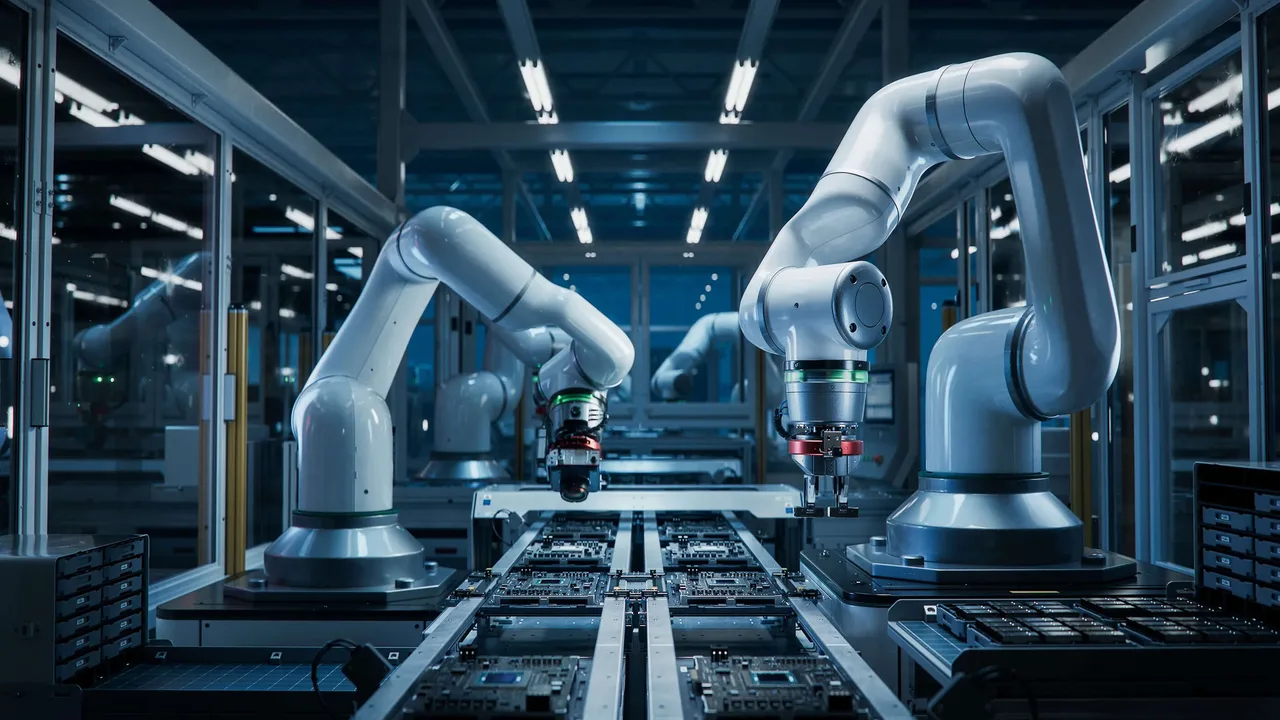
The next wave of industrial innovation lies in the convergence of artificial intelligence, robotics, and modular construction. Fabrication plants are now equipped with automated welders, robotic cutting systems, and smart cranes capable of reading BIM data in real time. These technologies eliminate human error and further compress the project schedule.
AI algorithms also assist with predictive maintenance and logistics coordination. By analyzing project data, they can forecast potential delays, optimize material flows, and improve crew allocation. This digital transformation ensures that prefabricated steel factory construction will continue to evolve toward even greater speed and accuracy.
Toward Global Adoption
Emerging markets are rapidly embracing prefabrication as a solution to industrial expansion challenges. Governments are investing in industrial infrastructure that relies heavily on steel modular systems due to their cost efficiency and rapid deployment. For developing economies seeking to attract manufacturing investment, prefabricated factories represent the fastest route to industrialization.
As sustainability regulations tighten, these systems also support compliance by reducing embodied carbon and improving resource utilization. Global supply chains increasingly favor contractors who can deliver high-performance structures with verifiable environmental credentials.
Conclusion — Redefining Industrial Construction Speed
Fast, flexible, and future-ready — the prefabricated steel factory is transforming how industries build and expand. It combines engineering precision with modular innovation, delivering unmatched speed without compromising quality or sustainability. By integrating off-site manufacturing, smart logistics, and digital monitoring, developers can achieve shorter construction times and faster project payback.
In a world where time equals opportunity, prefabrication has become the industrial sector’s greatest competitive advantage. As more companies embrace this model, the construction landscape will continue to evolve — toward smarter, cleaner, and faster ways of building.