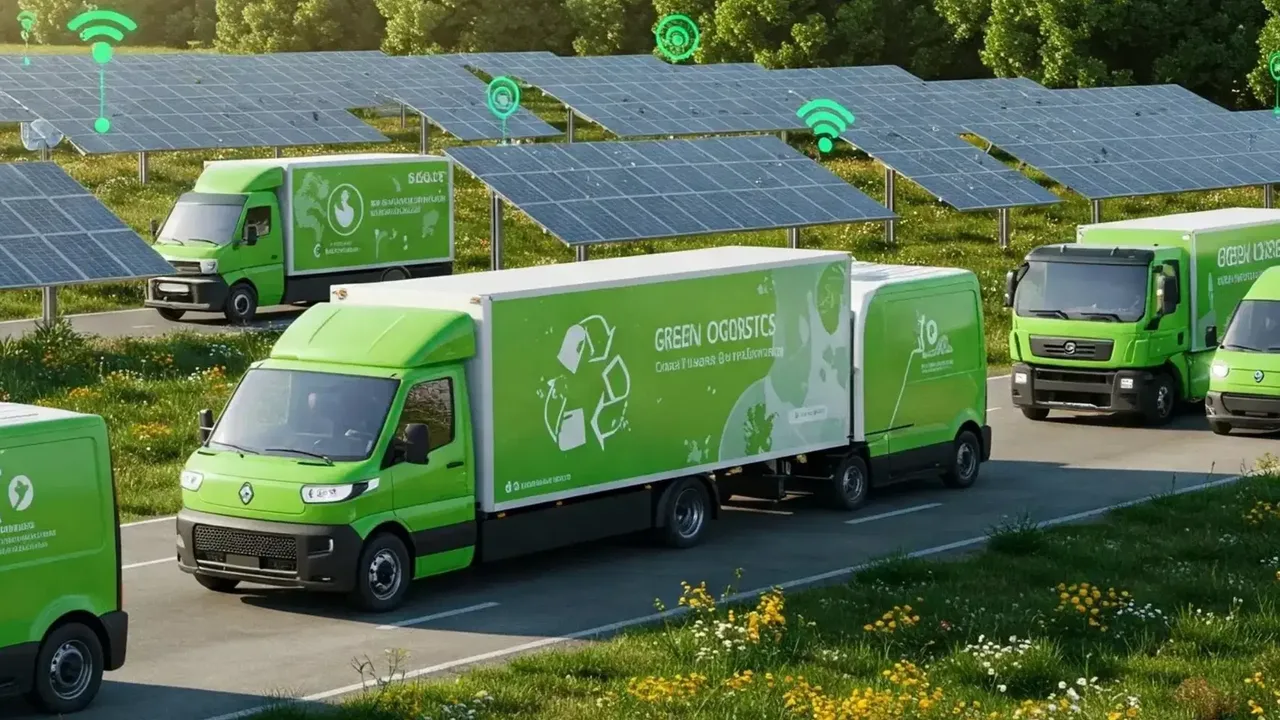
As global industries race toward sustainability, one sector stands out as both a major challenge and a major opportunity: logistics. The trucks, ships, planes, and warehouses that keep our economies running are also responsible for a significant portion of global CO₂ output. But the rise of green logistics is proving that transportation and environmental responsibility can coexist. By integrating sustainable transport and smarter eco supply chain systems, companies worldwide are cutting emissions while improving efficiency.
Introduction — The Urgency of Sustainable Supply Chains
For decades, the logistics industry focused on speed and cost. Yet, as climate change intensifies and regulatory pressures increase, the conversation has shifted. Businesses now face a new priority: sustainability. The challenge lies in balancing commercial efficiency with environmental impact. Every shipment, every route, and every container adds to the global footprint — but it also offers potential for change.
From last-mile delivery services to intercontinental freight operations, green logistics aims to reimagine how goods move across the planet. Through cleaner vehicles, smarter routing systems, renewable-powered warehouses, and transparent reporting, logistics is transforming from one of the biggest emitters into one of the most innovative sustainability leaders.
What Is Green Logistics?
Definition and Core Principles
Green logistics refers to the optimization of logistics and supply chain processes with minimal environmental impact. The concept revolves around integrating eco-friendly technologies, operational efficiency, and responsible resource management. It includes every stage of product movement — from sourcing raw materials to distribution and reverse logistics.
- Transportation: Using cleaner fuels, route optimization, and low-emission fleets.
- Warehousing: Implementing renewable energy systems and efficient cooling technologies.
- Packaging: Reducing waste and adopting recyclable or biodegradable materials.
- Waste management: Reusing containers and materials across multiple cycles.
The ultimate goal is simple yet ambitious: reduce emissions without sacrificing service quality or economic performance. This requires deep coordination between producers, distributors, and logistics providers within the larger eco supply chain.
How It Differs from Traditional Logistics
Traditional logistics models prioritize volume and speed, often at the cost of environmental efficiency. In contrast, green logistics embraces long-term sustainability metrics. It measures success not just by delivery times but also by fuel consumption, emission levels, and waste reduction.
In an eco supply chain, carbon tracking and route optimization software play vital roles. Digital monitoring tools calculate the environmental cost of every movement, from cargo handling to packaging disposal. Some companies are even using blockchain-based transparency systems to verify each shipment’s sustainability performance.
The Driving Forces Behind Green Logistics
Global Regulations and Corporate Responsibility
Governments and international bodies are now enforcing stricter emissions regulations across all sectors. Initiatives such as the EU Green Deal and the Paris Climate Agreement have pushed industries to adopt cleaner technologies and greener infrastructure. For logistics, this means transitioning to alternative fuels, retrofitting fleets, and improving energy performance in distribution hubs.
Corporate social responsibility (CSR) has also evolved beyond philanthropy. Today, investors and stakeholders demand concrete environmental performance data. Companies that fail to align with sustainability goals risk losing both regulatory approval and public trust. As a result, logistics firms are rethinking their operations from end to end — embracing sustainable transport as a strategic advantage rather than a compliance burden.
Consumer Awareness and Market Pressure
Beyond regulation, consumer demand is accelerating change. The modern buyer expects eco-conscious brands — and this expectation extends to logistics partners. Customers increasingly choose companies that disclose their carbon footprint and demonstrate a measurable reduction plan. The rise of e-commerce has amplified this shift, placing pressure on global delivery networks to become greener and more transparent.
Transparency has become a powerful differentiator. Firms that publish annual sustainability reports or track emissions through digital dashboards attract more brand loyalty. Green credentials are no longer optional — they’re a prerequisite for long-term competitiveness in international trade.
Key Strategies for Reducing Emissions
Sustainable Transport Solutions
Transportation accounts for roughly one-third of all logistics emissions, making it the top priority for innovation. Electric trucks, hydrogen-powered ships, and hybrid cargo aircraft are redefining what’s possible. These new technologies are not only cleaner but also cheaper to operate over time due to reduced fuel dependency and maintenance needs.
Smart routing software analyzes weather, road congestion, and delivery schedules to minimize travel distance. By combining GPS data and AI prediction, companies can plan routes that reduce idle time and fuel waste. This integration of automation and analytics represents the true core of sustainable transport.
| Technology | Emission Reduction Potential | Adoption Rate (2026 Projection) |
|---|---|---|
| Electric delivery trucks | Up to 60% | 35% of major urban fleets |
| Hydrogen freight vehicles | Up to 70% | 12% of long-haul fleets |
| AI-based route optimization | 15–25% | Nearly 50% of logistics providers |
These innovations reflect a broader transition from fossil-based infrastructure to an integrated, data-driven logistics ecosystem. Cleaner transport technologies are paving the road for a future where efficiency and ecology finally move in the same direction.
Warehouse Efficiency and Energy Optimization
Warehouses and distribution centers are major energy consumers, often running 24/7 under heavy lighting and temperature control systems. However, green logistics is transforming how these facilities operate. Solar rooftops, geothermal cooling, and motion-sensitive LED lighting are rapidly becoming standard features in new logistics developments.
AI-powered systems now monitor real-time energy use, adjusting power loads according to activity levels. Digital twins—virtual models of facilities—help predict maintenance needs and simulate layout improvements for optimal energy flow. According to the International Energy Agency, energy-efficient logistics facilities could reduce total operational emissions by 20–30% globally if widely implemented.
Some companies are even experimenting with autonomous electric forklifts and renewable microgrids that connect logistics centers directly to clean energy sources. These initiatives illustrate that sustainable design isn’t limited to architecture — it extends to every moving component of global trade.

Innovations in the Eco Supply Chain
Circular Logistics Models
The next step for green logistics is circularity—an approach that treats waste as a resource and prioritizes reuse at every level. In circular logistics models, materials don’t simply flow one way; instead, they move through continuous loops of collection, recycling, and reintegration into the production cycle. Packaging is designed to be returned, pallets are reused, and transport routes incorporate backhauling to avoid empty runs.
This concept directly connects with sustainable transport by maximizing vehicle capacity and reducing unnecessary mileage. Reverse logistics—retrieving used products for refurbishment or recycling—has become a key part of modern supply chains. When done right, it not only minimizes waste but also creates cost savings and new business opportunities.
Collaboration Across Industries
Green transformation in logistics cannot happen in isolation. Collaboration across industries is vital for systemic change. Manufacturers, freight operators, retailers, and policymakers must align on common sustainability goals. Partnerships between automakers and logistics firms, for example, have accelerated the rollout of electric delivery fleets. Likewise, data-sharing between ports and shipping lines helps optimize fuel consumption and scheduling.
Some global companies are investing heavily in green corridors—dedicated routes powered entirely by clean energy sources. These initiatives demonstrate how cooperation can amplify the impact of eco supply chain strategies and set new industry benchmarks for emissions reduction.
Measuring the Impact of Green Logistics
Tracking Carbon and Energy Performance
One of the biggest challenges in green logistics is measuring what truly matters. Businesses must quantify emissions, monitor fuel efficiency, and evaluate progress toward sustainability targets. This requires reliable data collection and analytics. Carbon calculators, IoT-enabled vehicles, and cloud-based dashboards are now essential tools for modern logistics managers.
Energy tracking is no longer optional; it’s central to accountability. Digital systems analyze fleet operations, warehouse power use, and shipment-level performance. This transparency enables companies to identify inefficiencies and take corrective action in real time. Over time, it leads to more resilient and environmentally responsible eco supply chain networks.
Transparency and Reporting
Investors and consumers are increasingly demanding disclosure through ESG (Environmental, Social, and Governance) reports. These frameworks encourage companies to report greenhouse gas data, renewable energy usage, and sustainability progress in consistent formats. By adopting standardized reporting, logistics firms build trust and demonstrate measurable improvement.
Companies that proactively share their sustainability metrics often outperform competitors in market perception and brand loyalty. Accountability doesn’t just protect the planet—it strengthens reputation and business resilience.
The Economic Advantages of Green Logistics
Lower Operational Costs Through Efficiency
Contrary to outdated assumptions, implementing sustainable practices doesn’t always cost more. In many cases, green logistics reduces expenses over time. Optimized routing lowers fuel consumption, while renewable-powered warehouses cut long-term utility costs. Additionally, preventive maintenance driven by AI analytics minimizes equipment downtime, improving overall productivity.
Fleet electrification is another area where cost and environmental goals align. Though initial investment may be higher, electric vehicles have fewer moving parts, reducing maintenance costs and extending lifespan. As renewable energy prices fall, logistics companies gain a competitive edge by reducing dependency on fossil fuels.
Competitive Advantage and Brand Trust
Today’s customers associate sustainability with credibility. A brand’s environmental performance influences purchase decisions and long-term loyalty. By implementing transparent green logistics practices, companies can attract eco-conscious clients, secure green financing, and enhance market reputation.
Governments and trade alliances are also offering incentives for adopting low-carbon infrastructure—ranging from tax breaks to priority contracts. Businesses that move early in this transition can benefit financially while setting an example for industry peers.
Future Outlook — Building a Sustainable Transport Network
Technology and Innovation
Emerging technologies are reshaping the future of sustainable transport. Artificial intelligence analyzes data from thousands of sensors to predict traffic, weather, and maintenance needs. Blockchain enables transparent recordkeeping for freight journeys, ensuring every step of the eco supply chain is traceable. Meanwhile, the Internet of Things (IoT) connects vehicles and facilities, creating a web of real-time communication that optimizes resource use and reduces waste.
These advancements push logistics closer to achieving end-to-end sustainability. Digital twins of entire supply chains allow planners to simulate operations and forecast environmental outcomes, ensuring continuous improvement. With innovation as its driver, logistics is evolving into a smart ecosystem that adapts to global demands while minimizing its environmental footprint.
Toward Net-Zero Logistics
Achieving net-zero emissions is the ultimate goal of green logistics. The path forward involves not only cleaner technologies but also systemic redesign. Governments, corporations, and technology developers must collaborate on large-scale infrastructure—electric highways, hydrogen fueling networks, and zero-emission ports.
Some of these initiatives are already underway, setting milestones for 2030 and beyond. As renewable energy expands and policies tighten, the logistics industry will play a pivotal role in global decarbonization. The journey to net-zero logistics isn’t optional—it’s essential for future economic stability and environmental survival.
Moving the World Responsibly
Logistics powers the modern world, but its environmental impact can no longer be ignored. Through green logistics, industries are proving that sustainability and profitability can work hand in hand. By adopting cleaner technologies, embracing sustainable transport, and investing in smarter eco supply chain strategies, businesses are reducing emissions while building resilience.
The shift toward responsible logistics is more than a growth—it’s a transformation of global commerce. As collaboration, innovation, and accountability deepen, the dream of a cleaner, more efficient world moves closer to reality. Every shipment counts, and every sustainable decision helps move the planet forward—one delivery at a time.