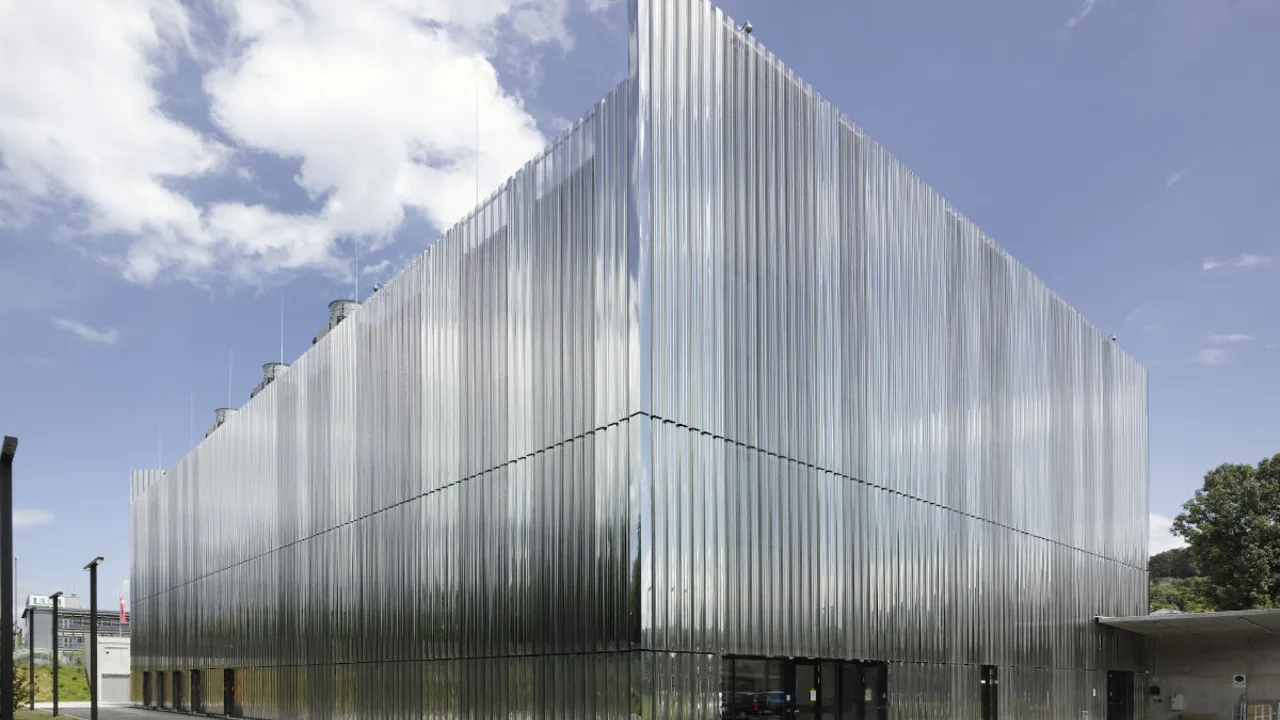
Across major cities worldwide, a quiet transformation is taking place. Former factories that once echoed with machinery now resonate with music, exhibitions, and experimental performances. The rise of the industrial art space reflects more than an architectural trend—it signals a cultural shift. As industries relocate or automate, their physical footprints remain behind. Rather than demolish these structures, artists and architects are reinventing them, turning industrial relics into vibrant creative ecosystems.
When Industry Meets Imagination
In the past, factories symbolized productivity, efficiency, and economic growth. Today, many stand abandoned, remnants of manufacturing eras long gone. Instead of viewing these buildings as obsolete, creative communities see potential. An industrial art space is not simply a gallery inside a warehouse; it is an architectural dialogue between history and innovation.
The movement aligns closely with the philosophy of adaptive reuse—the practice of repurposing existing buildings for new functions rather than demolishing them. This approach supports sustainability while preserving the emotional and cultural memory embedded in industrial structures. Through creative architecture, architects transform steel beams, brick walls, and concrete floors into immersive artistic environments that retain authenticity.
The Origins of the Industrial Art Space Movement
Post-Industrial Cities and Empty Factories
The birth of the modern industrial art space can be traced back to post-industrial cities in the late 20th century. As manufacturing industries declined in cities like New York, Berlin, and London, vast industrial districts were left vacant. These spaces, once economically essential, became affordable havens for artists seeking large studios and flexible layouts.
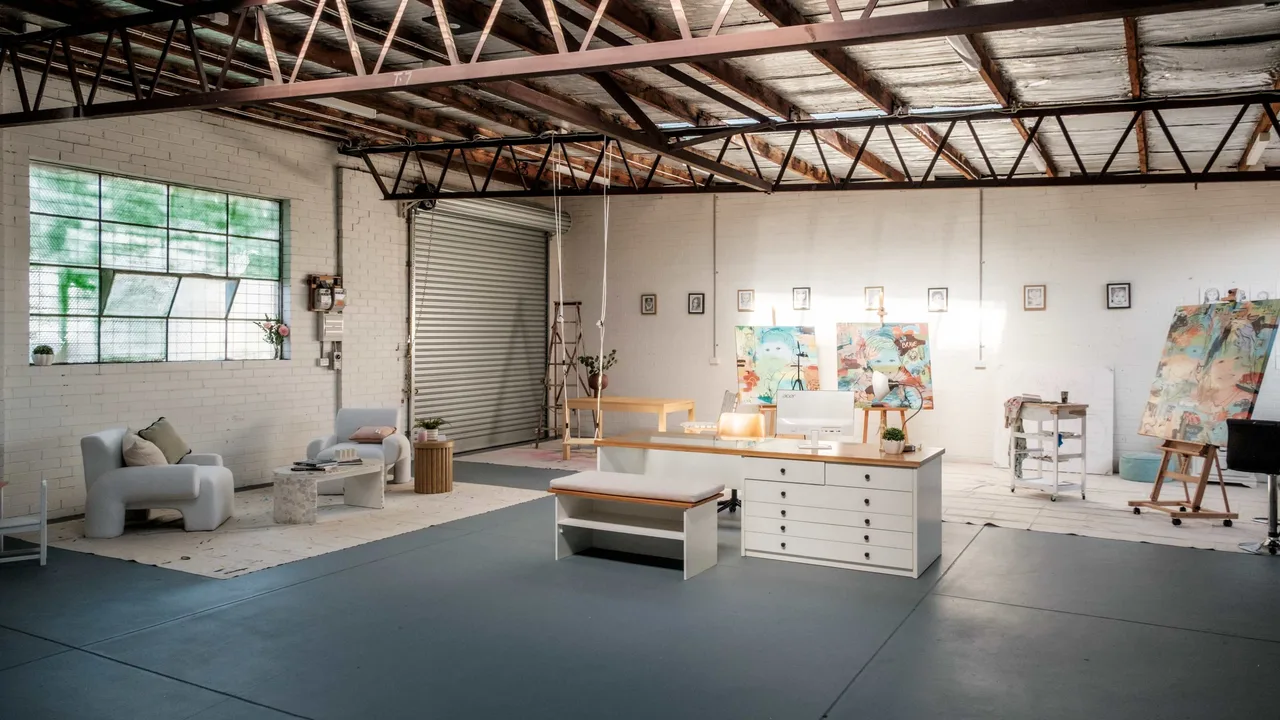
Artists were often the first to recognize the potential. High ceilings allowed for monumental installations. Open floor plans encouraged experimentation. Natural light streamed through expansive factory windows, creating atmospheres impossible to replicate in conventional gallery settings. What began as necessity soon evolved into a cultural phenomenon.
Artists, Loft Living, and Urban Reinvention
The shift from factory to gallery was gradual but powerful. Early adopters converted warehouses into live-work studios, blurring the line between residence and workspace. This evolution sparked the broader trend of adaptive reuse in urban redevelopment. Districts once defined by production began redefining themselves through art and innovation.
As communities grew around these spaces, city planners took notice. What started as informal artist studios gradually became curated industrial art space hubs supported by local governments and private investors. Over time, these conversions shaped entire creative districts, influencing urban identity and economic revitalization.
Adaptive Reuse — The Architectural Philosophy Behind It
What Is Adaptive Reuse in Architecture?
At the heart of every successful industrial art space lies the principle of adaptive reuse. Rather than demolishing structures and rebuilding from scratch, adaptive reuse leverages existing materials and infrastructure. This approach reduces construction waste, lowers embodied carbon, and preserves historical character.
From an environmental standpoint, demolition often generates massive amounts of debris and energy consumption. By contrast, reusing structural systems minimizes resource extraction and manufacturing emissions. According to the U.S. Environmental Protection Agency’s guidelines on sustainable construction materials, repurposing buildings can significantly reduce landfill waste and carbon impact.
Beyond sustainability, adaptive reuse offers financial advantages. Retaining structural frames and foundational systems reduces construction timelines and material costs. For creative projects operating within limited budgets, this balance between economy and authenticity makes the industrial art space model especially attractive.
Structural Advantages of Industrial Buildings
Factories were engineered for durability and scale, qualities that now benefit artistic transformation. Their structural features naturally support creative architecture:
- High ceilings allow large-scale installations and immersive exhibitions.
- Open-span layouts provide flexibility without intrusive columns.
- Exposed steel frameworks create raw aesthetic appeal.
- Large industrial windows maximize natural light.
These characteristics give each industrial art space a distinctive atmosphere. The interplay between rugged industrial materials and contemporary design interventions generates visual tension—an aesthetic that feels both authentic and experimental.
| Aspect | Demolition & New Build | Adaptive Reuse Model |
|---|---|---|
| Material Waste | High demolition debris | Significantly reduced waste |
| Carbon Footprint | Higher embodied carbon | Lower embodied carbon |
| Cultural Identity | Often lost | Preserved and reinterpreted |
| Project Timeline | Longer | Typically shorter |
Why Industrial Art Spaces Feel Different
Raw Materials and Authenticity
Unlike polished white-cube galleries, an industrial art space celebrates imperfection. Exposed brick walls reveal decades of wear. Steel beams show oxidation and texture. Concrete floors retain marks from past production lines. These elements create a layered narrative that enriches artistic presentation.
The emotional resonance of such environments cannot be overstated. Visitors often describe industrial galleries as immersive and grounded—spaces where history amplifies contemporary expression. This authenticity aligns seamlessly with modern artistic movements that favor honesty over ornamentation.
Scale, Light, and Spatial Freedom
Scale is perhaps the defining advantage of the industrial art space. Massive interiors invite bold experimentation. Installations that would overwhelm traditional galleries find breathing room within factory halls. Artists can suspend works from steel trusses, project visuals across expansive walls, or design multi-sensory environments without spatial limitation.
Natural light further enhances the experience. Tall factory windows diffuse daylight in ways that artificial lighting struggles to replicate. This dynamic illumination creates evolving atmospheres throughout the day, reinforcing the organic relationship between architecture and art.
Through creative architecture, designers amplify these inherent strengths rather than conceal them. Instead of hiding industrial features, they integrate them into the exhibition narrative—turning structural elements into aesthetic assets.
Cultural and Economic Impact of Industrial Art Spaces
Revitalizing Neighborhoods Through Art
The transformation of a factory into an industrial art space rarely affects only the building itself. Entire neighborhoods often shift alongside it. What begins as a modest gallery conversion can evolve into a creative district filled with studios, cafés, bookstores, and performance venues. This ripple effect demonstrates how adaptive reuse functions not only as an architectural strategy but also as an urban catalyst.
When artists move into formerly industrial areas, they bring visibility and foot traffic. Over time, local governments and investors recognize the potential for regeneration. Infrastructure improves, public transportation expands, and small businesses flourish. The presence of an industrial art space often signals cultural credibility—turning overlooked districts into destinations.
The Gentrification Debate
Yet this revival carries complexity. As neighborhoods become fashionable, property values rise. What was once affordable for artists can become inaccessible within a decade. Critics argue that the success of the industrial art space model can unintentionally accelerate displacement, pushing out the very creative communities that initiated transformation.
This tension highlights the need for balanced urban policy. Cities embracing creative architecture must also protect affordability and community identity. Sustainable revitalization depends on inclusive planning, ensuring that cultural growth benefits both residents and artists rather than favoring speculative development alone.
Case Studies Around the World
Tate Modern — London’s Power Station Reimagined
Perhaps the most famous example of an industrial art space is Tate Modern in London. Originally the Bankside Power Station, the massive brick structure was transformed into one of the world’s leading contemporary art museums. The design preserved the monumental turbine hall, allowing it to host large-scale installations impossible in conventional museum environments.
This project demonstrates the power of adaptive reuse at a global scale. Instead of demolishing a disused industrial landmark, architects reinterpreted it through creative architecture, blending industrial heritage with cultural ambition.
798 Art District — Beijing’s Creative Transformation
In Beijing, the 798 Art District emerged from a complex of decommissioned military factories. Artists gradually occupied the Bauhaus-influenced industrial buildings, turning them into galleries, studios, and event spaces. The raw concrete structures, steel trusses, and expansive interiors became defining features of the district’s identity.
The evolution of 798 reflects how the industrial art space can shape national creative identity. It shows how abandoned production zones can become hubs of innovation and tourism while retaining architectural authenticity.
American Warehouse Conversions
Across the United States, former warehouses in cities like Los Angeles and Detroit have been converted into hybrid art venues. These spaces combine exhibition halls with co-working areas, performance stages, and community workshops. Their flexibility reinforces why the industrial art space concept continues to expand.
In many of these cases, adaptive reuse preserved structural steel frames and concrete shells, significantly reducing environmental impact compared to new construction. The result is a sustainable cultural infrastructure rooted in history rather than replacement.
Industrial Art Space as a Future Urban Model
Sustainability and Creative Architecture
As climate awareness intensifies, the environmental logic of the industrial art space becomes even stronger. Reusing structural systems conserves embodied energy and reduces landfill waste. Rather than extracting new materials, architects reinterpret what already exists. This practice aligns directly with sustainable urban development goals.
Through creative architecture, industrial buildings gain second lives that extend far beyond their original purpose. Flexible layouts allow continuous adaptation—today a gallery, tomorrow a performance venue, and eventually perhaps a collaborative studio. This long-term adaptability enhances lifecycle value and reduces future demolition risk.
Hybrid Spaces — Work, Exhibit, Collaborate
The future industrial art space is rarely limited to exhibition alone. Increasingly, these environments blend creative production, public programming, and community engagement. Workshops coexist with digital studios. Installations share space with lectures and immersive media events. The industrial shell becomes a platform rather than a fixed identity.
This hybrid model supports resilience. By hosting diverse activities, industrial art spaces maintain economic stability while fostering cross-disciplinary exchange. Designers, technologists, musicians, and visual artists converge within environments shaped by adaptive reuse principles.
The Poetry of Reinvention
The rise of the industrial art space tells a story about transformation—of buildings, neighborhoods, and cultural imagination. What once symbolized production now symbolizes possibility. Factories designed for machinery have become canvases for creativity.
At its core, this movement demonstrates how adaptive reuse and creative architecture can coexist with sustainability, economic revitalization, and artistic innovation. Instead of erasing industrial history, architects and artists reinterpret it, preserving structural memory while projecting cultural futures.
As cities continue to evolve, the industrial art space stands as a compelling model for responsible reinvention. It proves that architecture does not need to discard the past to create the future. Sometimes, the most inspiring spaces are those that remember where they began.