Material selection is one of the most critical decisions in any industrial project. Whether building a logistics hub, manufacturing plant, or large-scale warehouse, the choice between steel vs concrete can determine structural efficiency, project timeline, long-term costs, and environmental impact. While both materials dominate global construction, they offer very different advantages depending on the project’s goals.
Industrial construction demands durability, scalability, and cost control. Developers and engineers must evaluate structural performance alongside practical considerations like erection speed and maintenance requirements. In this comparison, we break down the real differences between steel and concrete—without bias—so decision-makers can choose the material that aligns with their operational priorities.
Understanding the Core Properties of Steel and Concrete
Mechanical Strength and Structural Performance
When evaluating steel vs concrete, strength characteristics are often the first factor considered. Steel is known for its high tensile strength, meaning it can resist stretching and bending forces exceptionally well. This makes it ideal for long-span structures such as industrial warehouses and distribution centers where wide column spacing is required.
Concrete, on the other hand, excels in compressive strength. It performs extremely well under heavy vertical loads, making it a strong candidate for foundations, support cores, and structures requiring mass and rigidity. However, concrete’s relatively low tensile capacity often requires reinforcement with steel bars (rebar), combining both materials in many hybrid systems.
In terms of structural performance, steel offers greater flexibility and ductility. It can absorb dynamic loads, including wind and seismic forces, without cracking. Concrete structures, while robust, can be more brittle under sudden stress unless carefully engineered with reinforcement and expansion joints.
Durability and Environmental Resistance
Durability in industrial environments is influenced by exposure to moisture, chemicals, temperature variation, and mechanical stress. Steel structures require protective coatings or galvanization to prevent corrosion, particularly in humid or coastal regions. When properly treated and maintained, steel can maintain structural integrity for decades.
Concrete, though resistant to corrosion itself, may suffer from cracking due to shrinkage, thermal expansion, or ground movement. Over time, moisture infiltration can weaken reinforcement within concrete, leading to structural degradation if not monitored carefully.
In environments involving heavy machinery, chemical processing, or high humidity, choosing between steel vs concrete often depends on protective measures and lifecycle maintenance strategies rather than inherent material strength alone.
Construction Speed and Project Timeline
Prefabrication and Assembly Efficiency (Steel)
Steel construction is frequently associated with faster project delivery. Structural components are fabricated off-site in controlled factory environments and delivered ready for assembly. This prefabrication process reduces on-site labor demands and minimizes weather-related delays.
For industrial developers working within strict timelines, this advantage is significant. Once delivered, steel frames can be erected quickly using bolted or welded connections. Reduced construction time translates directly into earlier operational readiness and faster return on investment.
On-Site Casting and Curing (Concrete)
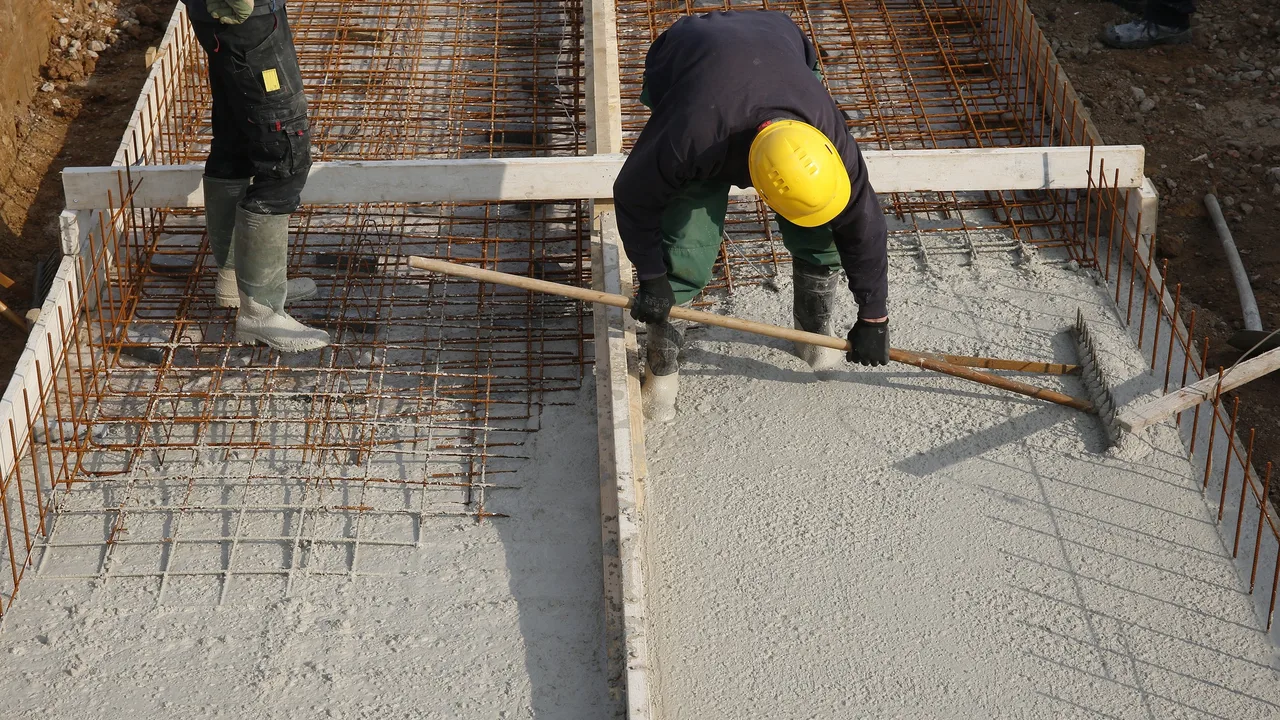
Concrete construction typically requires extensive on-site preparation, including formwork installation and curing time. The curing process alone can take several days to weeks, depending on environmental conditions and structural requirements. Weather fluctuations can further impact drying times and overall scheduling.
While concrete can be poured into virtually any shape, this flexibility comes with additional labor and time costs. For large industrial facilities, especially those requiring repetitive structural modules, steel often offers more predictable scheduling outcomes.
| Factor | Steel Construction | Concrete Construction |
|---|---|---|
| Fabrication Method | Off-site prefabrication | Primarily on-site casting |
| Construction Speed | Faster assembly | Slower due to curing time |
| Weather Impact | Minimal on-site disruption | High dependency on weather |
Cost Comparison — Short-Term vs Long-Term Investment
Initial Material and Labor Costs
In the debate of steel vs concrete, cost comparison is rarely straightforward. Material prices fluctuate based on global supply chains, energy costs, and regional availability. Steel may carry higher upfront material costs per ton, but its lighter weight reduces foundation requirements and speeds up installation.
Concrete materials—cement, aggregates, and water—are often locally sourced, which can reduce transportation costs. However, labor expenses may increase due to longer construction durations and more intensive on-site processes.
From a purely initial cost perspective, concrete can sometimes appear more affordable. Yet this does not account for time-related expenses such as extended labor, equipment rental, and delayed occupancy.
Maintenance and Lifecycle Costs
Over the long term, lifecycle cost considerations often shift the balance. Steel structures are easier to modify, expand, or retrofit, making them adaptable for evolving industrial operations. Routine maintenance such as repainting or coating can extend service life significantly.
Concrete structures may require crack repairs, joint sealing, and reinforcement inspection over time. If structural modifications are needed, alterations can be more labor-intensive and costly compared to steel frameworks.
A comprehensive cost comparison therefore must consider not only initial investment but also operational efficiency, flexibility, and maintenance over decades of use.

Structural Performance in Industrial Applications
Large-Span Warehouses and Factories
Industrial buildings often require wide, unobstructed interior spaces to accommodate machinery, storage systems, and logistics flow. In the ongoing debate of steel vs concrete, steel frequently demonstrates a clear advantage in long-span applications. Its high strength-to-weight ratio allows engineers to design large column-free areas without excessive structural mass.
Steel trusses and rigid frames can efficiently support expansive roofs, making them ideal for distribution centers, aircraft hangars, and manufacturing plants. This structural performance provides operational flexibility, allowing businesses to reconfigure layouts without major structural limitations.
Concrete, while capable of forming large spans through post-tensioning or reinforced systems, generally requires thicker structural members. This increases material usage and overall structural weight, potentially impacting foundation design and cost comparison outcomes.
Heavy Load and Compression-Based Structures
Concrete excels in projects dominated by compressive forces. Heavy industrial foundations, retaining walls, and core structures often rely on reinforced concrete due to its mass and compressive capacity. In facilities with extreme vibration or high static loads, concrete can offer inherent stability.
However, when evaluating steel vs concrete, it is important to recognize that many industrial buildings combine both materials strategically—steel for framing and concrete for foundations—leveraging the strengths of each system to optimize structural performance.
Sustainability and Environmental Considerations
Carbon Footprint and Embodied Energy
Environmental impact plays an increasingly important role in industrial material selection. Cement production, a key ingredient in concrete, is responsible for a significant percentage of global carbon emissions. According to data published by the International Energy Agency, cement manufacturing contributes heavily to industrial CO₂ output worldwide.
Steel production also consumes substantial energy, but steel offers one major environmental advantage: recyclability. Structural steel can be reused or recycled repeatedly without losing strength, making it a strong candidate for circular construction strategies.
When comparing steel vs concrete, lifecycle assessment becomes essential. While both materials carry environmental costs, steel’s adaptability and recyclability often improve its long-term sustainability profile.
Lifecycle Assessment in Industrial Projects
Lifecycle thinking evaluates materials beyond installation. It considers maintenance frequency, potential reuse, demolition impact, and long-term energy efficiency. Steel structures can often be dismantled and repurposed, reducing waste. Concrete demolition, by contrast, typically results in heavy debris that requires energy-intensive processing.
Industrial developers increasingly incorporate lifecycle modeling into early-stage planning to determine which material delivers better environmental performance over decades of use. This approach ensures that sustainability claims are grounded in measurable data rather than assumptions.
Flexibility and Future Expansion
Modifications and Structural Adaptability
Industrial facilities rarely remain static. As production capacity grows or technology evolves, buildings must adapt. In the comparison of steel vs concrete, steel structures are generally easier to modify. Additional bays can be added, walls can be repositioned, and mezzanines can be installed with relative efficiency.
Concrete structures, due to their monolithic nature, can present greater challenges during expansion. Cutting into reinforced slabs or altering load-bearing walls requires careful engineering and may increase downtime during renovations.
Demolition and Reuse Potential
At the end of a building’s lifecycle, material recovery becomes a significant consideration. Steel components can often be dismantled and recycled directly into new structural elements. This high recovery rate reduces landfill waste and supports circular economy principles.
Concrete can be crushed and reused as aggregate, but this process requires additional energy and does not preserve the original structural performance of the material. Therefore, in terms of long-term adaptability and reuse, steel often presents a stronger case in the steel vs concrete evaluation.
Risk Factors and Safety Considerations
Fire Resistance
Concrete possesses inherent fire resistance due to its non-combustible composition and thermal mass. Steel, while also non-combustible, can lose strength when exposed to extremely high temperatures. For this reason, fireproofing treatments such as intumescent coatings or cladding systems are commonly applied to steel frameworks.
Both materials can meet stringent safety standards when properly engineered. The key lies in design detailing and compliance with fire codes rather than the material alone.
Seismic and Wind Performance
In regions prone to earthquakes or high winds, ductility becomes critical. Steel’s flexibility allows it to absorb and dissipate energy under dynamic loads, reducing the risk of sudden structural failure. Concrete structures, while strong, may require additional reinforcement and expansion detailing to achieve comparable seismic performance.
Thus, regional environmental risks often influence whether steel vs concrete emerges as the preferred solution for industrial construction.
Which Material Is Right for Your Industrial Project?
There is no universal answer to the steel vs concrete debate. The optimal choice depends on project scale, budget constraints, environmental goals, and timeline requirements. Developers seeking rapid construction and flexible layouts may favor steel. Projects requiring substantial compressive mass or local material sourcing may lean toward concrete.
| Decision Factor | Steel Advantage | Concrete Advantage |
|---|---|---|
| Construction Speed | Rapid prefabrication | Slower curing process |
| Flexibility | Easy expansion & modification | Rigid, stable mass |
| Recyclability | Highly recyclable | Limited structural reuse |
| Compressive Strength | Requires design optimization | Inherently strong in compression |
Beyond Steel vs Concrete
The comparison of steel vs concrete is not about declaring a winner but understanding context. Each material brings unique strengths and limitations that influence structural performance, cost comparison, and environmental impact. Industrial construction projects demand careful evaluation of these variables rather than reliance on tradition or perception.
Ultimately, successful industrial design integrates engineering expertise, lifecycle analysis, and strategic planning. Whether steel, concrete, or a hybrid system is chosen, informed decision-making ensures that the final structure delivers durability, efficiency, and long-term value.