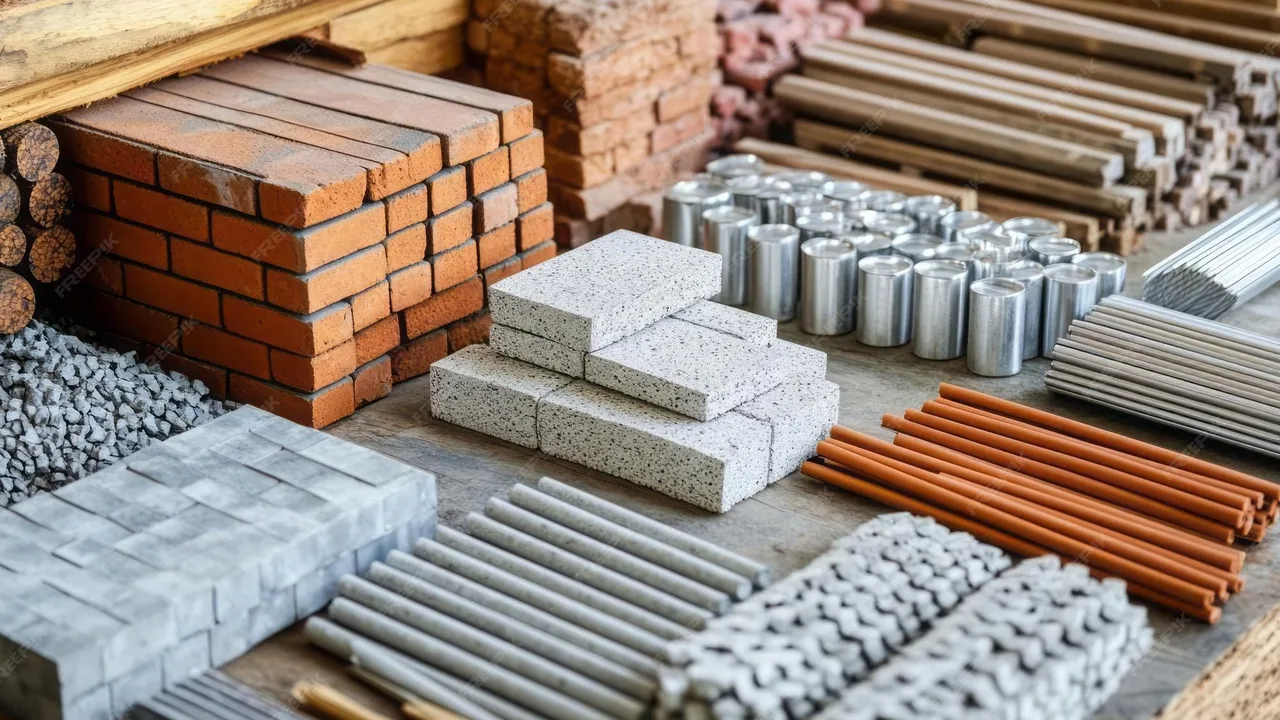
As sustainability moves from trend to necessity, the demand for sustainable building materials has never been higher. Once dominated by concrete, steel, and timber, the construction industry is now redefining what it means to build responsibly. While wood has long been considered a renewable favorite, growing concerns about deforestation and carbon emissions are pushing architects and developers to explore new directions. The result? A surge of innovation that blends technology, ecology, and creativity into a new era of material design.
Introduction — Rethinking the Future of Building Materials
The concept of sustainability in construction has evolved far beyond “eco-friendly” slogans. Today, green design emphasizes measurable impact — reduced energy consumption, longer material life cycles, and ethical sourcing. As cities expand and populations rise, the pressure on natural resources continues to intensify. Timber, while renewable, isn’t an infinite solution. Deforestation and inconsistent replanting efforts have raised doubts about whether the global supply chain can keep pace with demand.
For forward-thinking builders, the question is no longer whether we should use timber, but how we can replace or complement it with smarter, more resilient alternatives. That mindset shift is driving a global transition toward sustainable building materials that are as strong as they are environmentally sound.
Why Timber Is No Longer Enough
The Environmental Cost of Traditional Wood
Wood remains one of humanity’s oldest and most trusted building materials. However, its environmental cost is becoming harder to ignore. Large-scale timber harvesting contributes to deforestation, habitat loss, and soil degradation. Even when sourced responsibly, the carbon emissions associated with processing, transportation, and construction can offset much of its renewable advantage.
In addition, the global appetite for timber has outpaced forest regeneration rates in many regions. While certification systems such as FSC and PEFC have improved accountability, illegal logging and unsustainable practices persist in parts of Asia, Africa, and South America. These trends make the search for alternatives not just an environmental choice, but an ethical obligation.
The Search for Smarter, Greener Substitutes
To combat these issues, researchers and architects are exploring a range of wood substitutes that can replicate timber’s warmth and workability while outperforming it in durability and sustainability. The materials range from recycled composites to naturally regenerating fibers, proving that innovation can be both high-tech and environmentally responsible.
Hybrid structures combining bamboo, recycled steel, or engineered composites are now gaining ground. These systems allow architects to maintain the aesthetic appeal of wood while improving strength, resistance to fire, and longevity. For many, this represents the evolution of sustainable design — a blend of natural form and engineered precision.
Exploring Modern Timber Alternatives
Engineered Composites and Hybrid Panels
Among the most promising sustainable building materials are engineered composites such as cross-laminated bamboo, mycelium-based blocks, and hempcrete panels. Each offers a unique balance of strength, insulation, and environmental performance. Mycelium — a fast-growing fungal network — has become particularly intriguing for architects. It grows naturally, requires little energy, and can be molded into structural shapes before being dried into a lightweight yet strong material.
Cross-laminated bamboo panels offer another compelling alternative. Bamboo matures in three to five years — far faster than traditional timber — and provides comparable tensile strength. When processed into laminated panels, it can form high-rise frameworks and floor systems with minimal environmental impact. The growing adoption of such bio-composites demonstrates how modern construction is shifting from extraction to regeneration.
| Material | Main Advantage | Environmental Impact |
|---|---|---|
| Cross-Laminated Bamboo | High strength, rapid regrowth, lightweight | Carbon negative with proper cultivation |
| Hempcrete | Excellent insulation, fire resistant | Low embodied energy, absorbs CO₂ during curing |
| Mycelium Blocks | Biodegradable, customizable shapes | Fully compostable, minimal waste |
Recycled and Bio-Based Materials
The future of construction lies in closing the material loop — creating resources from what would otherwise be waste. Upcycled plastics, agricultural residues, and mineral-rich waste from industrial processes are being converted into durable panels and bricks. These solutions not only reduce landfill volume but also extend the lifecycle of resources already in circulation.
Design platforms and innovation hubs like MaterialDistrict showcase how bio-based materials are changing the market. From mushroom-derived acoustic panels to plastic-free insulation foams, these innovations embody the true spirit of circular economy thinking. They also prove that sustainability doesn’t have to compromise aesthetics — in fact, it can inspire entirely new design languages.
Advantages of Using Sustainable Building Materials
Environmental Benefits
The shift toward sustainable building materials offers measurable ecological gains. By replacing slow-growing timber with renewable alternatives, projects can significantly lower carbon emissions and deforestation rates. These materials also support closed-loop systems, where waste from one process becomes the input for another. In effect, every construction project becomes part of a broader environmental recovery strategy.
Beyond reducing emissions, many new materials actively contribute to carbon sequestration. Bamboo and hemp absorb large amounts of CO₂ during growth, while mycelium structures biodegrade safely at the end of their lifespan — eliminating the waste legacy associated with conventional materials.
Economic and Technical Benefits
While sustainability often carries the perception of higher cost, modern alternatives are proving otherwise. Many wood substitutes are not only affordable but also more stable in price due to local sourcing and low transportation needs. Their lightweight nature reduces logistics costs, while enhanced durability cuts maintenance and replacement expenses over time.
In terms of performance, materials like hempcrete and engineered bamboo can outperform timber in fire resistance, acoustic insulation, and compressive strength. Combined with modular fabrication techniques, they also shorten construction timelines — a crucial advantage in fast-paced urban development.
Ultimately, these advances show that the rise of sustainable building materials is more than an environmental choice; it’s an economic and structural revolution reshaping how the world builds.
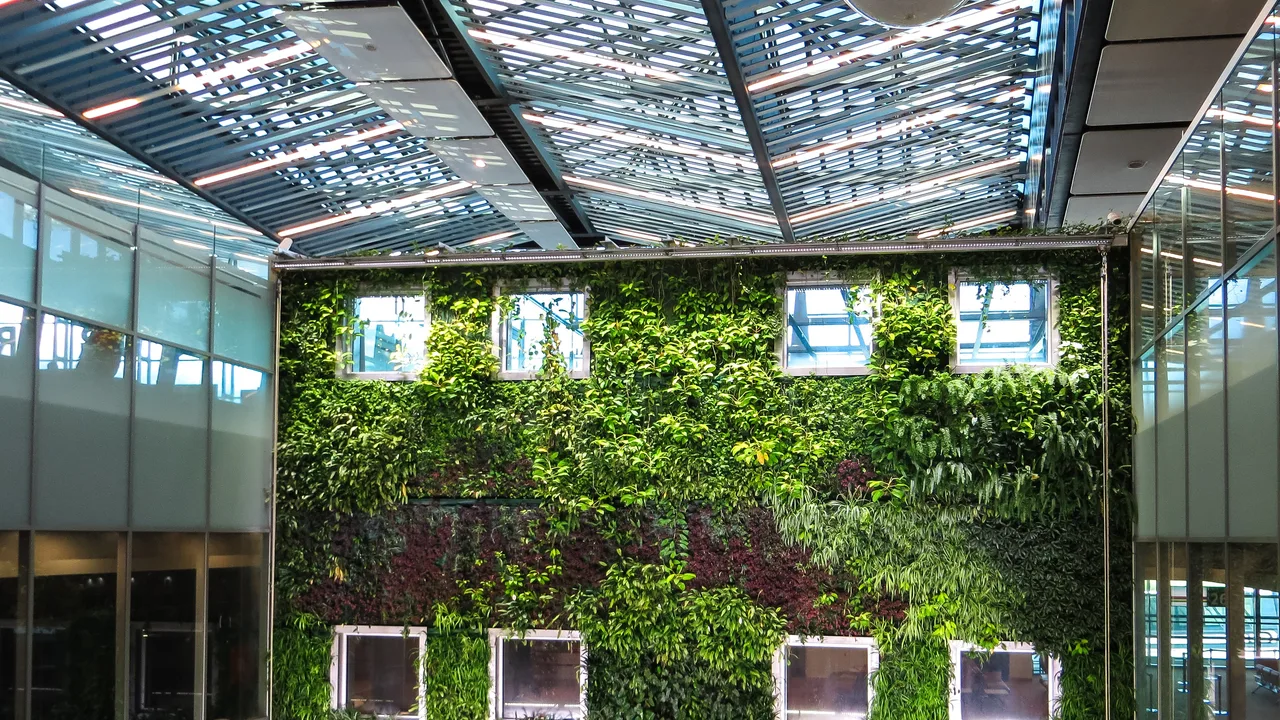
Green Design Philosophy and Architecture
The Role of Architects and Engineers
In the evolution toward sustainable building materials, architects and engineers play a defining role. Their choices determine whether innovation translates into meaningful impact. The best designs merge aesthetics, function, and ethics — proving that environmental responsibility and beauty can coexist. By incorporating green design principles early in planning, architects can reduce waste, improve energy performance, and select materials with minimal embodied carbon.
Engineers are complementing these efforts through performance-based modeling. By using data-driven simulations, they can predict how materials will respond over decades of use. This proactive approach ensures that sustainability isn’t a label but an embedded quality within every structure.
Integration with Smart Construction Technologies
Technology has become a powerful ally of sustainability. Advanced software and AI-driven modeling now allow architects to assess the environmental impact of their material choices in real time. Digital fabrication tools, such as 3D printing and robotic assembly, make it possible to produce complex shapes with minimal waste — maximizing both precision and efficiency.
Material tracking systems and blockchain-based certification platforms are also emerging to verify the origins of eco-friendly resources. These innovations ensure transparency from raw material extraction to on-site assembly. With technology guiding selection and certification, the use of wood substitutes becomes easier to standardize and scale globally.
Overcoming Industry Challenges
Market Resistance and Misconceptions
Despite progress, some skepticism remains around alternative materials. Builders accustomed to traditional timber and concrete often question the long-term durability or load-bearing capacity of new solutions. However, successful pilot projects and rigorous testing have proven that many sustainable building materials not only match but exceed the performance of conventional options.
Market resistance is also cultural. Many stakeholders associate sustainability with high costs or unfamiliar aesthetics. Education campaigns and professional training programs are helping to dispel these myths, highlighting the real economic and technical benefits of innovative materials. Once developers see reduced maintenance costs and faster construction timelines, adoption quickly follows.
Regulation and Certification
For green design to reach its full potential, standardized sustainability criteria must be adopted across borders. International organizations and governments are introducing new frameworks to ensure the credibility of eco-material claims. Life-cycle analysis (LCA) is increasingly becoming mandatory for large infrastructure projects, requiring developers to quantify the environmental impact of every material used.
These frameworks are critical in ensuring accountability. Verified environmental product declarations (EPDs) and global certification systems provide consistency, giving architects and builders the confidence to specify innovative materials without fear of non-compliance. As regulatory systems strengthen, transparency will shift from optional to essential in global construction.
The Future of Construction Beyond Timber
A Shift Toward Circular and Adaptive Design
The concept of “building for permanence” is being replaced by adaptive, regenerative thinking. Circular design encourages materials that can be reused, repaired, or recycled at the end of a building’s life. This shift transforms waste into resource — the foundation of a sustainable future.
Emerging practices like modular design and prefabrication are leading the way. By designing components that can be easily disassembled and repurposed, architects ensure that today’s buildings become tomorrow’s resources. Such approaches not only minimize waste but also make large-scale construction more resilient to supply disruptions and material shortages.
The New Definition of “Natural”
For decades, the construction industry equated “natural” with “better.” But as environmental science evolves, that notion is being redefined. A truly natural material is one that supports ecological balance — regardless of its origin. Whether grown, engineered, or recycled, what matters is measurable sustainability, not marketing appeal.
This mindset shift broadens the definition of sustainable building materials. Innovations like bio-concrete, recycled aluminum, and cellulose insulation are proving that performance and environmental responsibility are not mutually exclusive. Each new material challenges traditional boundaries and expands what’s possible in modern architecture.
Conclusion — Building Responsibly for the Next Generation
The rise of timber alternatives marks a pivotal turning point for global construction. As the limitations of traditional wood become apparent, new materials are leading the industry toward smarter, greener, and more ethical practices. From engineered bamboo and hempcrete to bio-composites and recycled polymers, these innovations reflect a shared ambition — to build structures that serve both people and the planet.
By embracing green design and advancing sustainable building materials, the construction industry can evolve beyond its carbon-heavy past. The path forward requires collaboration, education, and continuous experimentation. As technology, regulation, and creativity converge, the future of architecture will be defined not by the materials we exhaust, but by the solutions we renew.