

Hospitals around the world are under pressure like never before. Aging populations, staff shortages, rising operational costs, and increasing expectations for patient safety are forcing healthcare systems to rethink how care is delivered. In this context, robotics healthcare is no longer a futuristic concept—it is becoming a practical solution to real operational challenges. From automated logistics to intelligent surgical assistance, robotics is reshaping how hospitals function day to day.
Healthcare Meets Intelligent Machines
For decades, healthcare innovation focused primarily on medical breakthroughs: new drugs, better imaging, and advanced surgical techniques. Today, the bottleneck is often operational rather than clinical. Hospitals struggle with inefficient workflows, administrative overload, and human-error-sensitive processes. This is where medical automation enters the picture.
Unlike consumer-facing medical gadgets, robotics in healthcare operations targets the invisible backbone of hospitals—how supplies move, how data flows, and how staff time is allocated. The goal is not to replace doctors or nurses, but to remove friction from systems so that human expertise can be used where it matters most: patient care.
The Evolution of Robotics in Healthcare
From Surgical Assistance to Hospital-Wide Automation
Early applications of robotics in healthcare were narrowly focused. Surgical robots, for example, were designed to enhance precision in minimally invasive procedures. These systems proved that machines could operate reliably in high-stakes medical environments. Over time, that trust expanded beyond the operating room.
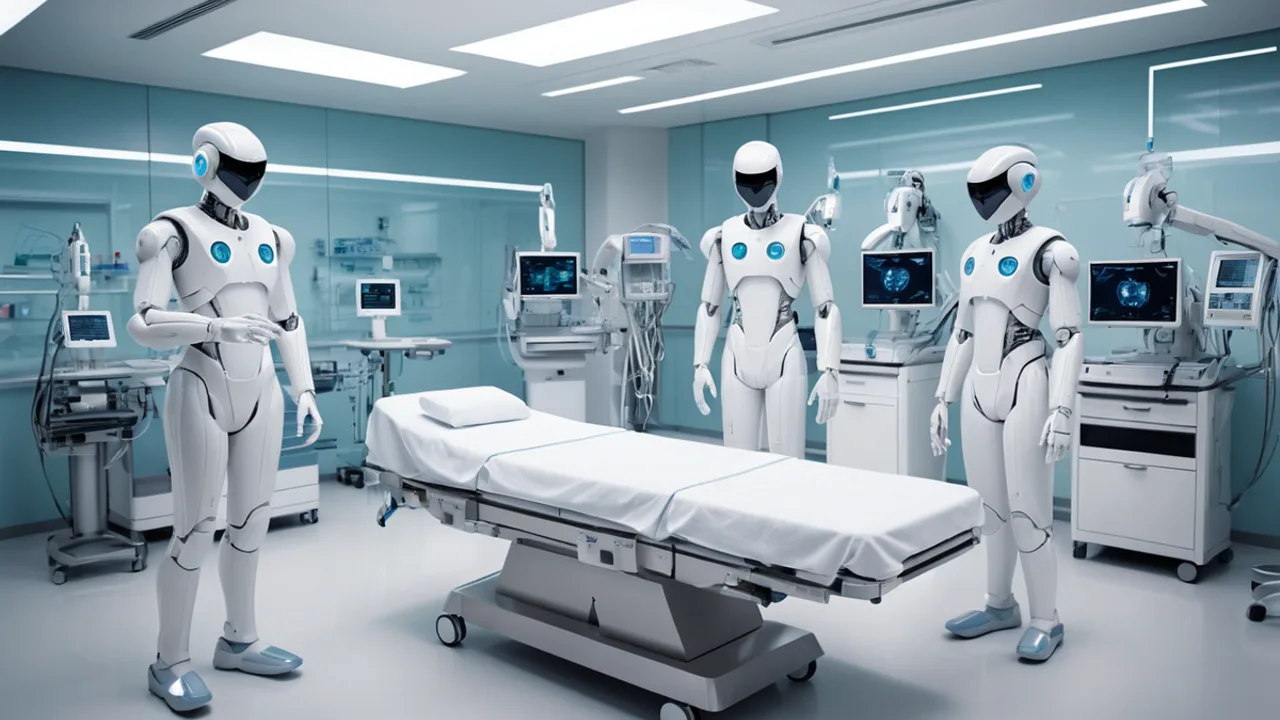
Today, robotics healthcare encompasses a much broader scope. Autonomous mobile robots transport medications, lab samples, and sterile equipment across hospital corridors. Robotic arms assist in pharmacy compounding. Disinfection robots use UV light to sanitize rooms more consistently than manual cleaning. What began as isolated tools has evolved into interconnected systems embedded in daily hospital operations.
Why Hospitals Are Turning to Robotics
The shift toward robotics is driven by necessity, not novelty. Hospitals face chronic staffing shortages, especially in nursing and support roles. Repetitive tasks—such as moving supplies, restocking inventory, or documenting routine data—consume valuable staff hours. By introducing automation, hospitals can reallocate human effort to tasks requiring judgment, empathy, and clinical expertise.
In addition, robots offer consistency. Unlike humans, they do not fatigue, lose concentration, or deviate from protocols. In environments where precision and hygiene are critical, this reliability directly supports patient safety and operational resilience.
Core Areas Where Robotics Is Transforming Healthcare Operations
Surgical Robotics and Precision Medicine
Surgical robotics remains one of the most visible examples of technology in healthcare. Robotic-assisted systems allow surgeons to perform complex procedures with enhanced dexterity and visualization. Smaller incisions, reduced blood loss, and faster recovery times are among the documented benefits.
From an operational perspective, these systems also standardize procedures. Data collected during surgeries can be analyzed to refine techniques, improve training, and reduce variability between practitioners. While surgeons remain in full control, robotics acts as a precision amplifier—supporting consistent outcomes across cases.
Logistics, Pharmacy, and Supply Chain Automation
Behind every successful medical procedure lies a complex logistics network. Medications must be delivered on time, sterile instruments must be available when needed, and inventory levels must be tightly controlled. Manual handling of these tasks introduces delays and errors, especially in large facilities.
Autonomous robots now handle internal logistics with minimal supervision. They navigate hospital floors, avoid obstacles, and coordinate with elevators and access systems. In pharmacies, robotic dispensing systems prepare and deliver medications with a level of accuracy difficult to match manually. This form of medical automation reduces waste, prevents dosage errors, and ensures traceability throughout the supply chain.
Patient Care and Support Robotics
Robotics is also entering patient-facing roles in controlled ways. Service robots assist with routine monitoring, deliver meals, and provide basic information to patients and visitors. During infectious disease outbreaks, robots have proven especially valuable by limiting unnecessary human exposure while maintaining essential services.
These applications are often associated with the concept of ai hospitals, where robotics, data analytics, and intelligent systems work together. Sensors, robots, and software platforms share information to coordinate tasks efficiently, creating a responsive and adaptive care environment.
Medical Automation and Hospital Efficiency
Reducing Operational Costs Without Sacrificing Care
One of the most compelling arguments for robotics is economic. Labor-intensive processes are expensive and difficult to scale. While robots require upfront investment, they offer predictable operating costs over time. Hospitals adopting automation often report lower overtime expenses, reduced error-related costs, and improved asset utilization.
Importantly, efficiency gains do not come at the expense of care quality. By automating non-clinical tasks, staff have more time for patient interaction, care coordination, and complex decision-making. In this way, robotics healthcare supports both financial sustainability and patient satisfaction.
Data Integration and Smart Hospital Systems
Robotics does not operate in isolation. Its real power emerges when integrated with digital health records, AI analytics, and connected medical devices. Automated systems generate detailed operational data—movement patterns, task durations, error rates—that can be analyzed to optimize workflows.
As hospitals move toward smarter infrastructure, robotics becomes a physical extension of digital intelligence. When combined with predictive analytics and system-level planning, automation helps healthcare organizations transition from reactive operations to proactive, data-driven management.
International health bodies have highlighted the importance of digital and automated systems in strengthening healthcare delivery, particularly in resource-constrained environments, where efficiency and consistency are critical for patient outcomes.
Human–Robot Collaboration in Healthcare
Robots as Assistants, Not Replacements
A common misconception around robotics healthcare is that machines are designed to replace doctors and nurses. In reality, most hospital robotics systems are built to augment human capability rather than eliminate it. Robots excel at repetitive, rules-based tasks, while healthcare professionals bring judgment, empathy, and adaptability—qualities machines cannot replicate.
In daily operations, this collaboration is already visible. Nurses rely on automated delivery robots to handle time-consuming errands, freeing them to focus on patient assessment and care. Pharmacists supervise robotic compounding systems that ensure precise dosing while maintaining oversight and accountability. The result is a more balanced workload where human expertise is applied where it delivers the greatest value.
Training, Adaptation, and Cultural Barriers
Despite clear benefits, integrating robotics into healthcare is not without challenges. Staff training is a major consideration. Hospitals must invest in educating employees to work confidently alongside machines, interpret system outputs, and respond when automation flags anomalies. Resistance often stems not from technology itself, but from uncertainty about changing roles.
Cultural adaptation is equally important. Successful adoption of medical automation depends on involving clinical teams early in the process, addressing concerns transparently, and demonstrating how robotics improves—not complicates—their daily work. When staff view robots as reliable partners rather than disruptive forces, adoption accelerates.
Ethical and Regulatory Challenges
Safety, Accountability, and Patient Trust
Healthcare operates under stricter ethical standards than most industries, and rightly so. Introducing robotics raises important questions: Who is responsible if an automated system fails? How are decisions audited? How is patient data protected?
Maintaining trust requires clear accountability frameworks. Hospitals must ensure that robotic systems are thoroughly tested, monitored, and governed by human oversight. Transparent protocols help patients understand that technology supports care delivery without removing professional responsibility. In robotics healthcare, safety is not just a technical requirement—it is a moral obligation.
Regulation and Compliance in AI Hospitals
Regulatory bodies play a crucial role in shaping how automation is deployed in healthcare. Unlike consumer technology, medical robotics must comply with rigorous approval processes, clinical validation, and ongoing monitoring. These safeguards slow adoption but ensure patient safety and system reliability.
As hospitals evolve toward ai hospitals, regulators are increasingly focusing on interoperability, cybersecurity, and explainability of automated decisions. Guidance from organizations such as the World Health Organization on digital health and AI underscores the importance of aligning innovation with ethical and clinical standards, especially as automation becomes more deeply embedded in care delivery.
The Future of AI Hospitals
Predictive Care and Semi-Autonomous Operations
Looking ahead, robotics will move beyond task execution toward predictive support. By combining robotic systems with AI analytics, hospitals can anticipate demand, identify potential risks, and optimize resource allocation in advance. For example, automated logistics systems may predict supply shortages based on admission trends, while robotic monitoring tools flag early signs of patient deterioration.
This shift enables a transition from reactive healthcare to proactive care models. Rather than responding to problems after they occur, hospitals can intervene earlier, improving outcomes while reducing strain on staff and infrastructure.
What the Next Decade Will Look Like
Over the next ten years, medical automation is expected to become a standard component of hospital design. New facilities are already being planned with robotics-friendly layouts, dedicated automation corridors, and integrated digital command centers. Older hospitals will retrofit systems incrementally, guided by cost-benefit analysis and operational priorities.
The most successful institutions will not be those with the most robots, but those that integrate technology thoughtfully—aligning automation with clinical goals, ethical standards, and human-centered design.
Redefining Healthcare Operations Through Robotics
The transformation underway in healthcare is operational as much as it is clinical. Robotics healthcare addresses the hidden inefficiencies that limit care quality, from logistics delays to staff burnout. By automating routine tasks and supporting data-driven decision-making, robotics enables healthcare professionals to focus on what they do best: caring for people.
As hospitals continue to evolve, robotics will play an increasingly central role in building resilient, efficient, and patient-centered systems. The future of healthcare operations is not about choosing between humans and machines—it is about designing systems where both work together to deliver safer, smarter, and more sustainable care.