
The construction industry is standing at a turning point. As climate change accelerates and its impacts become impossible to ignore, the way we design, build, and operate structures is undergoing a fundamental rethink. Climate conscious construction is no longer a niche concept discussed only in policy circles or academic papers—it is rapidly becoming a practical necessity for developers, designers, and communities alike.
For decades, construction focused primarily on speed, cost efficiency, and visual impact. Environmental considerations were often secondary or treated as optional upgrades. Today, that mindset is shifting. Rising global temperatures, stricter regulations, and growing public awareness are forcing the industry to confront its role in carbon emissions and resource consumption. This new era demands responsibility, transparency, and smarter choices at every stage of the building process.
Introduction
Globally, the built environment accounts for a significant share of carbon emissions, energy use, and material extraction. Buildings do not just consume energy once they are completed; they also carry a heavy environmental burden from the moment raw materials are mined, processed, and transported. This reality has pushed climate conscious construction from a theoretical ideal into a practical framework for action.
Governments are tightening emissions targets, investors are scrutinizing environmental performance, and occupants are becoming more selective about where they live and work. In this context, construction projects are no longer judged solely by how they look or how fast they are delivered, but by how responsibly they respond to climate challenges. Carbon reduction and sustainable design are now core expectations, not optional extras.
What Climate-Conscious Construction Really Means
Beyond “Green Buildings”
It is easy to confuse climate-conscious approaches with the broader idea of “green buildings.” While green buildings often emphasize energy efficiency or the use of renewable technologies, climate conscious construction goes further. It considers the full environmental impact of a project, from planning and material selection to long-term operation and eventual reuse or demolition.
This approach avoids narrow solutions that optimize one aspect of performance while ignoring others. A highly insulated building, for example, may still carry a large carbon footprint if its materials are carbon-intensive or sourced inefficiently. Climate-conscious thinking looks at the entire system, aiming for balanced decisions that genuinely reduce environmental harm.
Core Principles of Climate Conscious Construction
At its core, climate-conscious construction is guided by a set of practical principles rather than marketing labels. These principles shape decision-making across design, engineering, and execution:
- Lifecycle awareness — evaluating environmental impact from material extraction to end-of-life.
- Carbon reduction — setting clear emissions targets early in the project.
- Performance-driven design — prioritizing measurable outcomes over visual symbolism.
- Long-term resilience — designing buildings that adapt to future climate conditions.
By embedding these ideas from the outset, projects can avoid costly retrofits and reduce environmental impact more effectively.
Carbon Reduction as a Design Imperative
Embodied Carbon vs Operational Carbon
To understand why climate conscious construction matters, it is essential to distinguish between two major sources of emissions: embodied carbon and operational carbon. Embodied carbon refers to emissions generated during the production, transportation, and assembly of building materials. Operational carbon, on the other hand, comes from energy used during the building’s lifetime for heating, cooling, lighting, and equipment.
Historically, most sustainability efforts focused on reducing operational carbon through better insulation and energy-efficient systems. While this remains important, embodied carbon can represent a significant share of a building’s total climate impact—especially in new construction. Addressing both factors is crucial for meaningful carbon reduction.
Material Choices That Shape Climate Impact
Material selection plays a defining role in the environmental footprint of any project. Concrete, steel, timber, and composite materials each come with trade-offs related to durability, recyclability, and emissions. Sustainable design does not mean choosing one “perfect” material, but using materials more efficiently and responsibly.
Reducing overdesign, optimizing structural systems, and sourcing materials locally can often achieve greater carbon savings than switching materials outright. Climate-conscious construction emphasizes material efficiency—using only what is necessary and ensuring that materials can be reused or recycled at the end of their service life.
Sustainable Design in Practice
Designing for Longevity and Adaptability
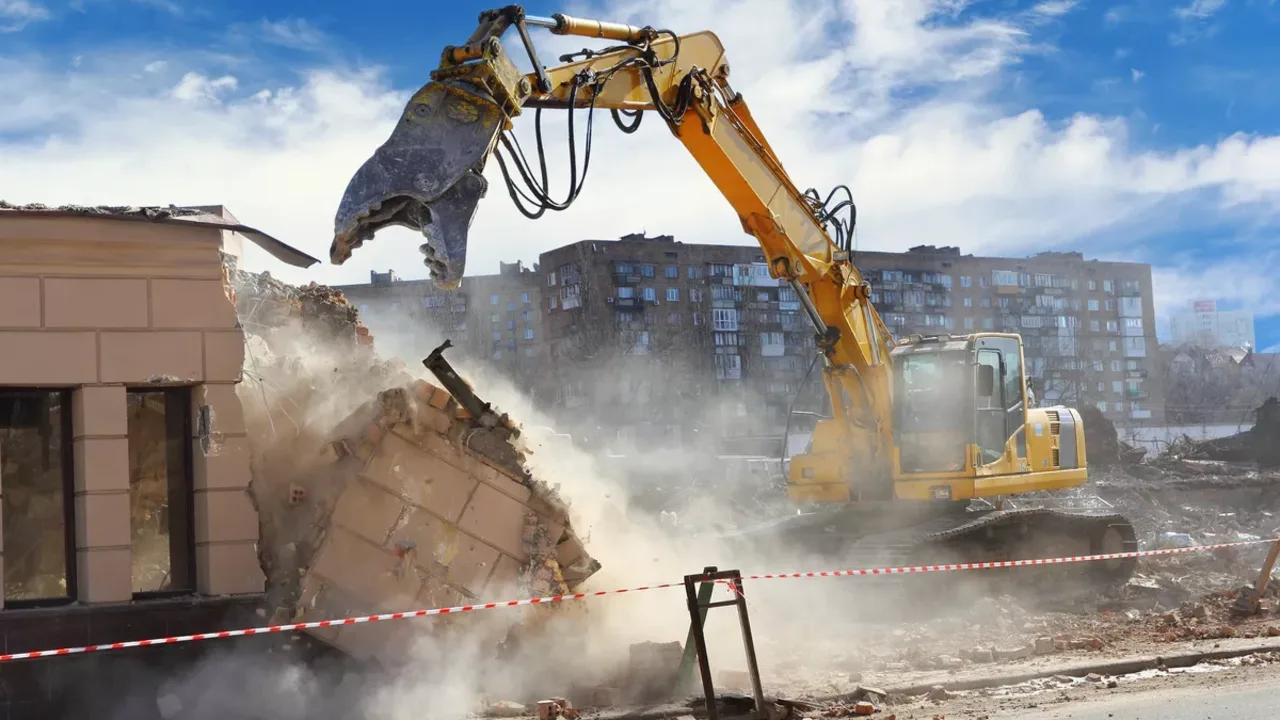
One of the most overlooked aspects of sustainability is time. Buildings that are designed to last longer and adapt to changing needs inherently reduce environmental impact. Demolition and replacement are among the most carbon-intensive activities in construction. By contrast, adaptable buildings extend value while minimizing waste.
Through modular layouts, flexible floor plans, and structural systems that allow future modification, climate conscious construction supports longevity. This approach aligns sustainability with economic logic: a building that remains useful for decades delivers better returns while consuming fewer resources overall.
Passive Design and Energy Intelligence
Before adding complex mechanical systems, climate-conscious projects prioritize passive design strategies. Orientation, natural ventilation, shading, and daylight optimization can significantly reduce energy demand. These techniques are not new, but modern modeling tools allow designers to apply them with far greater precision.
When passive strategies are combined with efficient systems, sustainable design becomes both practical and resilient. Buildings consume less energy, respond better to climate extremes, and rely less on technologies that may become obsolete or expensive over time.
Technology’s Role in Climate-Conscious Construction
Data, Modeling, and Carbon Tracking
Technology has become a critical enabler of climate conscious construction. Digital modeling tools now allow project teams to estimate carbon impact long before ground is broken. By comparing multiple design scenarios, architects and engineers can understand how structural systems, materials, and layouts affect emissions over time.
Carbon tracking tools support informed decision-making rather than assumptions. Instead of relying on generic benchmarks, teams can quantify emissions at each stage and adjust strategies accordingly. This data-driven approach helps shift sustainability from aspiration to accountability, ensuring that carbon reduction targets are grounded in measurable outcomes.
Smarter Construction Processes
Beyond design, construction methods themselves play a major role in environmental performance. Inefficient planning often leads to wasted materials, excess transport, and unnecessary rework. Climate-conscious projects emphasize precision, coordination, and efficiency throughout execution.
Prefabrication, optimized scheduling, and improved logistics reduce on-site waste and energy use. When materials arrive exactly when needed and are installed correctly the first time, projects move faster with fewer emissions. In this way, sustainable design is reinforced by equally sustainable construction practices.
Economic Reality — Cost, Value, and Climate Responsibility
Is Climate-Conscious Construction More Expensive?
A common misconception is that climate-conscious approaches automatically increase costs. While some strategies may require higher upfront investment, they often deliver long-term financial benefits. Energy-efficient buildings typically have lower operating expenses, reduced maintenance needs, and greater resilience to future regulatory changes.
From a lifecycle perspective, climate conscious construction frequently proves more economical. Buildings designed with carbon reduction in mind are less exposed to energy price volatility and more attractive to tenants and investors seeking long-term value. What appears expensive at first glance can become a cost-saving strategy over decades.
Market Pressure and Regulatory Shifts
Economic incentives are also evolving. Governments and financial institutions increasingly link funding, approvals, and incentives to environmental performance. Carbon reporting, environmental disclosures, and climate-related risk assessments are becoming standard requirements rather than exceptions.
As regulations tighten, projects that ignore climate considerations face higher compliance costs and potential obsolescence. In contrast, those aligned with climate-conscious principles gain a competitive edge. Sustainable design is no longer just an ethical choice—it is a strategic one.
Common Pitfalls and Misconceptions
When Sustainability Becomes a Checkbox
One of the biggest risks in modern construction is treating sustainability as a checklist rather than a guiding principle. Relying solely on labels or minimum compliance standards can lead to superficial solutions that fail to address real environmental impact.
Climate conscious construction requires continuous evaluation and improvement. Without performance monitoring and transparent reporting, even well-intentioned projects can fall short of their goals. Avoiding this pitfall means prioritizing outcomes over appearances.
Balancing Idealism with Practical Constraints
Not every project operates under ideal conditions. Budget limitations, supply chain disruptions, and regional constraints all influence decision-making. Climate-conscious design does not demand perfection; it demands responsibility within real-world boundaries.
Making informed trade-offs—choosing the most impactful interventions rather than the most visible ones—is key. Even incremental improvements can significantly reduce emissions when applied consistently across projects.
The Future of Climate-Conscious Construction
From Optional to Expected
The future of construction points toward normalization of climate responsibility. What was once seen as a premium feature is rapidly becoming a baseline expectation. Clients, occupants, and regulators increasingly assume that buildings will address carbon reduction as a standard requirement.
As awareness grows, climate conscious construction will shift from being a differentiator to a fundamental measure of quality. Projects that fail to meet this expectation risk losing relevance in a rapidly changing market.
Building Culture, Not Just Buildings
Ultimately, the success of climate-conscious construction depends on cultural change within the industry. Education, collaboration, and transparency must guide how professionals think about their role in shaping the built environment.
Architects, engineers, developers, and contractors all influence climate outcomes through everyday decisions. By embedding sustainability into professional culture, the industry can move beyond isolated projects toward systemic transformation.
Building Responsibly in a Warming World
The construction sector has immense power to shape the future—both environmentally and socially. Climate conscious construction offers a path forward that aligns responsibility with innovation, performance, and long-term value. It challenges the industry to rethink priorities and embrace accountability at every stage.
In a warming world, building responsibly is no longer optional. Through thoughtful design, carbon-aware decision-making, and a commitment to continuous improvement, construction can become part of the solution rather than a source of the problem. The new era is already here; the question is how deliberately the industry chooses to step into it.