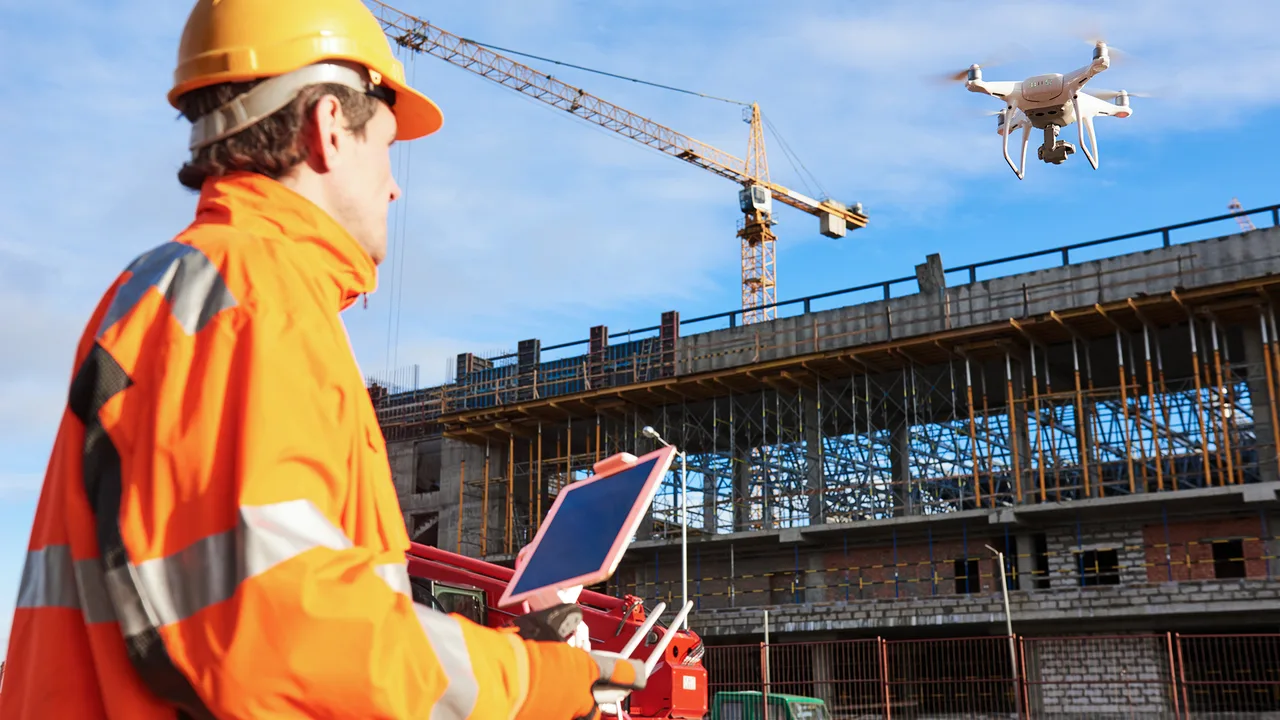
Over the last decade, drone technology construction has revolutionized how the industry plans, monitors, and executes complex projects. Once seen as futuristic gadgets, drones have now become indispensable tools for engineers, surveyors, and site managers worldwide. From site mapping to aerial inspection, they’re helping teams capture accurate data, reduce risks, and improve efficiency on a scale traditional methods could never achieve.
Introduction — How Drones Took Over the Construction Sky
Technology has always shaped how we build. But the arrival of drones marks one of the most dramatic shifts since the digitalization of design. Construction sites, traditionally filled with heavy machinery and manual labor, are now complemented by buzzing fleets of autonomous aerial devices. These drones offer real-time visuals, instant data processing, and improved safety without slowing down operations.
As urban development accelerates, companies are under pressure to complete projects faster while minimizing costs and environmental impact. That’s where drone technology construction plays its part—turning manual tasks into automated, data-driven processes that optimize every phase of a build. Drones today do far more than take pictures; they think, analyze, and report.
Evolution of Drone Technology in Construction
From Hobby Devices to Industrial Tools
In the early 2010s, drones were primarily tools for photographers and hobbyists. But rapid advances in sensors, GPS technology, and AI-powered software transformed them into professional-grade devices capable of complex industrial tasks. Today’s drones can measure land elevation, monitor resource usage, and even support 3D reconstruction of entire job sites. This evolution has given rise to a new breed of construction management where precision and efficiency go hand in hand.
Market adoption has surged in the last five years. Major infrastructure developers now integrate drones as standard tools for planning, quality control, and maintenance. What once required days of manual surveying can now be completed in minutes, with higher accuracy and less human error.
Integration with Other Technologies
The real strength of modern drones lies in their ability to integrate with digital platforms like Building Information Modeling (BIM), AI analytics, and cloud-based project management tools. Through automated synchronization, construction teams receive up-to-date aerial imagery directly into their BIM software, improving coordination across departments.
For example, cloud-based tools from Autodesk allow drone-collected data to merge seamlessly with 3D design models. This integration reduces information silos and helps architects, engineers, and contractors make faster, data-backed decisions. The combination of aerial insights and digital modeling is transforming how the world’s most complex projects are managed.
Key Applications of Drones in Construction
Site Mapping and Surveying
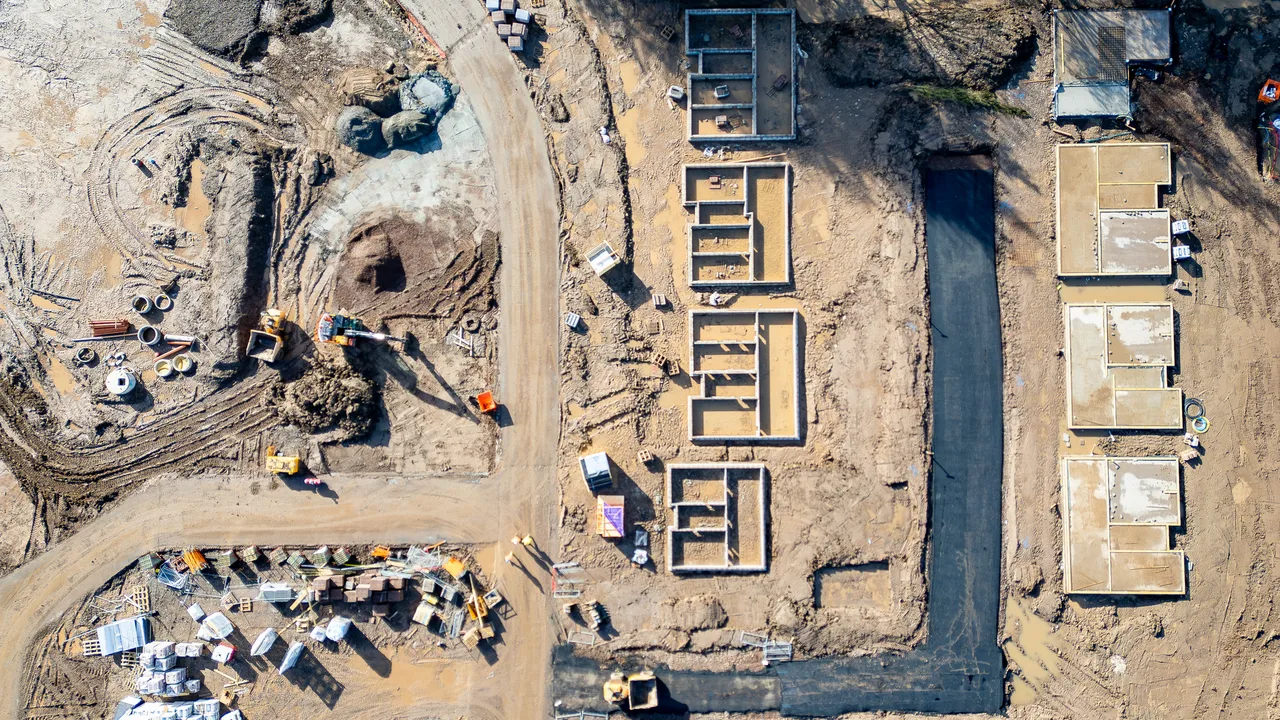
Traditional surveying methods are time-consuming and prone to human error. In contrast, drones equipped with LiDAR or photogrammetry cameras can produce detailed 3D topographic maps in hours. These high-resolution images not only capture land contours but also calculate surface area and volume accurately—critical for excavation and foundation planning. Site mapping powered by drones eliminates repetitive manual measurements and reduces survey costs by up to 70%.
Beyond cost savings, the data accuracy of drone-based mapping has improved design validation. Engineers can overlay real-time drone data onto design models to spot inconsistencies early, preventing expensive rework later in the project.
Aerial Inspection and Monitoring
Aerial inspection has become one of the most valuable drone applications in construction. Instead of climbing scaffolds or cranes, inspectors can now send drones to capture close-up visuals of structures at any height or angle. With ultra-HD cameras and infrared sensors, drones can detect cracks, water leaks, or heat loss in buildings and bridges long before human eyes can spot them.
Real-time monitoring also enhances transparency for project stakeholders. Drone footage streamed to cloud dashboards allows clients to observe progress remotely—an especially valuable advantage for multinational projects or restricted sites. The result is better accountability, fewer on-site visits, and more informed decision-making.
Inventory and Resource Management
Drones are increasingly used to monitor material stocks, equipment, and logistics. They can scan construction yards to count materials like steel beams or concrete panels and automatically compare inventory levels against digital databases. Some advanced systems employ AI recognition algorithms that identify specific components by shape and color, allowing instant reporting of missing or misplaced items.
This level of automation gives managers complete visibility over the supply chain, improving resource allocation and minimizing costly delays caused by shortages or miscommunication. In essence, drones transform inventory tracking from a manual checklist into a live, dynamic process.
Advantages of Drone Technology Construction
Speed, Accuracy, and Cost Efficiency
The impact of drones on construction efficiency can be summarized by three key metrics: speed, accuracy, and cost. Drones can map 100 acres in under 30 minutes—something that could take a human crew several days. Their high-resolution imaging delivers centimeter-level precision, reducing costly measurement errors. The financial benefits are substantial: lower labor costs, faster project delivery, and improved decision-making from better data.
| Process | Traditional Method | Drone-Based Method |
|---|---|---|
| Site Survey Time | 2–3 Days | 2–3 Hours |
| Labor Cost | High (4–6 Personnel) | Low (1–2 Operators) |
| Accuracy Level | ±10 cm | ±2 cm |
Enhanced Worker Safety
Perhaps the most immediate benefit of drones lies in improving safety. Tasks that once required workers to climb unstable scaffolds or inspect hazardous areas can now be done remotely. With drone technology construction, risk exposure decreases dramatically, reducing accidents and insurance costs. Drones can access tight or high spaces without disrupting ongoing operations, ensuring both speed and safety coexist on the same site.
As safety regulations become stricter, drone-assisted inspections are emerging as a new compliance standard across construction sectors worldwide.
Challenges and Limitations
Legal and Regulatory Issues
Despite the widespread benefits of drone technology construction, implementation is not without challenges. One of the biggest barriers remains the complex legal framework governing drone operations. Each country has its own set of flight regulations, restricted zones, and licensing requirements. In urban environments, drones often need special permits to fly over populated or sensitive areas such as government facilities and airports. Non-compliance can result in severe fines and project delays.
Privacy concerns also complicate drone use. Aerial footage can inadvertently capture private property or individuals, raising ethical and legal questions about data collection. Construction firms must therefore establish strict data handling policies and ensure that all drone operations adhere to local privacy laws and aviation standards.
Data Management and Technical Barriers
Drones collect massive amounts of data—images, LiDAR scans, and thermal readings—that must be stored, processed, and interpreted. Without proper infrastructure, this data can quickly overwhelm project teams. To make the most of aerial inspection and site mapping, construction companies need robust data processing pipelines and trained personnel capable of turning raw imagery into actionable insights.
Another technical challenge is environmental dependence. Weather conditions like wind, rain, and low visibility can disrupt flight accuracy and reduce data quality. Maintenance and battery management add further complexity, as drones require regular calibration and firmware updates to perform reliably over time.
The Future of Drone Technology in Construction
AI and Automation
The next frontier in drone technology construction lies in automation. Autonomous drones equipped with artificial intelligence will soon be capable of self-navigation, collision avoidance, and automated flight scheduling. These intelligent systems will operate continuously, scanning and analyzing job sites with minimal human supervision.
AI-driven analytics are also transforming how data is interpreted. Algorithms can now detect structural defects, estimate material volumes, and predict maintenance needs instantly. When combined with Internet of Things (IoT) sensors, drones can create a fully connected job site that “learns” from ongoing activity, improving both productivity and accuracy.
Sustainable Construction through Drones
Drones are playing a growing role in sustainable development. They can monitor energy use, assess construction waste, and track emissions throughout a project’s lifecycle. By offering a bird’s-eye view of environmental performance, drones help companies minimize their ecological footprint. They are also instrumental in reforestation, coastal restoration, and environmental rehabilitation projects, providing a fast and cost-effective way to collect data for sustainability reporting.
In this sense, drones aren’t just reshaping how we build—they’re changing how we care for the environment. They bridge the gap between industrial progress and ecological responsibility, enabling smarter, greener, and more efficient construction practices.
Conclusion — Redefining Construction Efficiency
The use of drones marks a turning point in the evolution of the construction industry. By combining speed, accuracy, and safety, drone technology construction is helping companies execute complex projects more effectively than ever before. From site mapping to aerial inspection, drones are revolutionizing every stage of development—reducing costs, enhancing data quality, and ensuring a safer workplace.
As AI and automation continue to mature, drones will become an integral part of sustainable and digital construction ecosystems. For industry leaders, adopting this technology is no longer optional—it’s essential to stay competitive in a rapidly modernizing world. The sky, quite literally, has become the newest and most powerful workspace for builders and innovators alike.